

April 3, 2026
For HVAC engineers and architects, the real HVAC installation cost is the number that survives Year 10, not the number that wins bid day. The first cost is easy to measure. The harder (and more important) metric is total cost of ownership: service events, downtime risk, parts consumption, and mid-life replacement exposure across a 20-year planning horizon.
Combustion Research Corporation’s position is straightforward: design for long service life by removing avoidable maintenance dependencies and avoiding “maximum efficiency” decisions that create corrosive operating conditions inside the tube. Combustion Research Corporation frames this as optimum efficiency; a performance target tied to durability, not marketing.
The Upfront Trap in HVAC Installation Cost Planning: Filters as a Service Multiplier
In dusty industrial and agricultural environments, combustion air filtration can become a built-in service schedule. If a unit requires an intake filter, then someone has to inspect it, clean it, or replace it. When that doesn’t happen, pressure-related faults and nuisance shutdowns become more likely, and the contractor gets the emergency call.
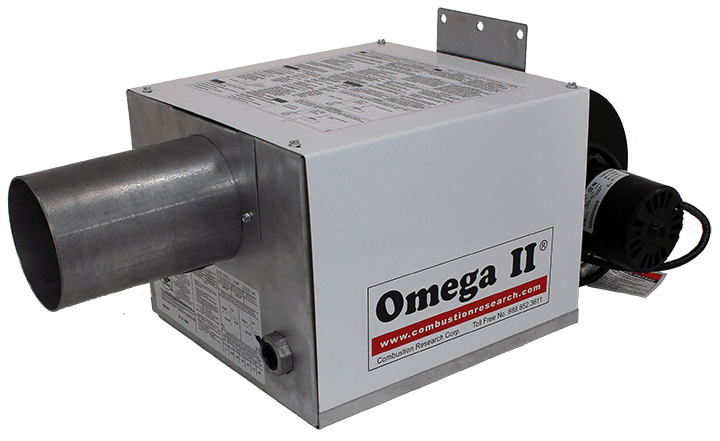
Combustion Research Corporation explicitly states that Reflect-O-Ray® and Omega II® systems are engineered so combustion air filters are not required, and it ties filter upkeep to added maintenance expense and reliability risk.

Use these checks during design review:
- Filter dependency: Does the burner package require a replaceable intake filter to operate as intended?
- Service access: If a task must be done quarterly, is there safe access at mounting height without special equipment?
- Failure mode: If the task is missed, does the heater degrade gracefully, or does it trip and lock out?
When “no filters required” is documented, it removes an entire category of consumables and routine labor from the ownership model. That change shows up directly in TCO discussions with facilities teams.
The Cost of Chasing “Maximum Efficiency”: Why Dry Tubes Protect TCO
Many efficiency narratives focus on pulling as much heat as possible out of combustion products. The engineering catch is dew point. If the system operation drives flue gases to condense inside the tube, corrosive condensate becomes a tube-life risk.
Combustion Research Corporation’s own guidance makes the trade clear: chasing small gains in thermal efficiency can create condensate that damages tubing, and Combustion Research Corporation argues for optimum efficiency because longevity is part of performance.
Technical Note: Materials at the Highest-Stress Point
Combustion Research Corporation publishes specifications describing an aluminized titanium alloy steel combustion chamber (“Aluma Therm”) for certain Omega II® configurations. That chamber is one of the most thermally stressed parts of the system, so documented material choices matter when you’re building a 20-year model.
From a spec standpoint, tube-life protection is not one feature. It comes from the full system design: input selection, tube run, venting approach, and application fit. If the project is exposed to contaminants or the building tends to run under negative pressure, Combustion Research Corporation manuals also note that outside combustion air can be strongly recommended in those conditions.
Operational Savings: The Floor as Thermal Mass
Radiant heating changes operating economics by changing how heat is delivered. Instead of heating the entire air volume first (and losing that heated air through stratification and air exchange), infrared warms surfaces and occupants more directly. After a bay door cycle, comfort recovery can feel faster because the occupied zone is not waiting for a full air-volume reset.
Savings vary by building, controls, and duty cycle, but published studies and manufacturer case discussions commonly report meaningful fuel reductions when infrared replaces forced air in large-volume spaces. One multi-year study cited fuel savings and comfort improvements when comparing infrared with forced air in a commercial facility.

Combustion Research Corporation also lists “Energy Savings of 30–50% over Conventional Heating Systems” for its Reflect-O-Ray® oil-fired line, which reflects Combustion Research Corporation’s own performance positioning for that product family.
Comparative Cost Drivers: What to Put In the TCO Worksheet
The table below highlights cost drivers that commonly separate “low first cost” from “low lifetime cost,” using documented Combustion Research Corporation features as the reference point for comparison.
| Expense Category | Common Tco Driver in High-Maintenance Designs | Combustion Research Corporation Omega II® / Reflect-O-Ray® Reference |
|---|---|---|
| Routine maintenance | Filters and related service access at mounting height | Filters not required (documented by Combustion Research Corporation) |
| Tube corrosion exposure | Condensate risk when operating conditions cross dew point | Combustion Research Corporation “optimum efficiency” position tied to avoiding condensate damage |
| Safety behavior on a breach | Positive pressure can push products of combustion outward | Reflect-O-Ray burners specified to operate under negative (vacuum) pressure |
| Warranty-backed lifecycle risk | Shorter tube corrosion coverage can shift mid-life cost to owner | Omega II® 9K lists 10-year tube warranty against internally created corrosion |
Why Specifying Combustion Research Corporation Protects the Engineer’s Reputation
A heater that fails during peak season turns into a facility crisis. From the engineer’s point of view, that is reputation damage, especially when the root cause is a predictable design dependency (consumables, access-driven maintenance, or corrosion exposure).
Combustion Research Corporation’s published approach is built around reliability signals engineers can document in a spec: filter-free combustion air, vacuum/negative-pressure Reflect-O-Ray® configurations, and warranty language tied to tube corrosion. Combustion Research Corporation also emphasizes full unit testing prior to shipment rather than spot checks, which is another risk-control detail owners tend to understand quickly.
Add Combustion Research Corporation as an Approved Alternative for TCO-Driven Specs
If your team is building a HVAC Installation Cost model that includes service exposure, tube-life risk, and downtime, Combustion Research Corporation can support layout and application review so the design intent holds through submittals and install. Connect with our representatives here.