

April 1, 2026
Commercial HVAC Repair rarely starts with a “major failure.” In many industrial, agricultural, and high-particulate facilities, it starts with something smaller but more expensive over time: clogged intake filters, nuisance pressure-switch trips, and repeated service visits that become a permanent line item in total cost of ownership.
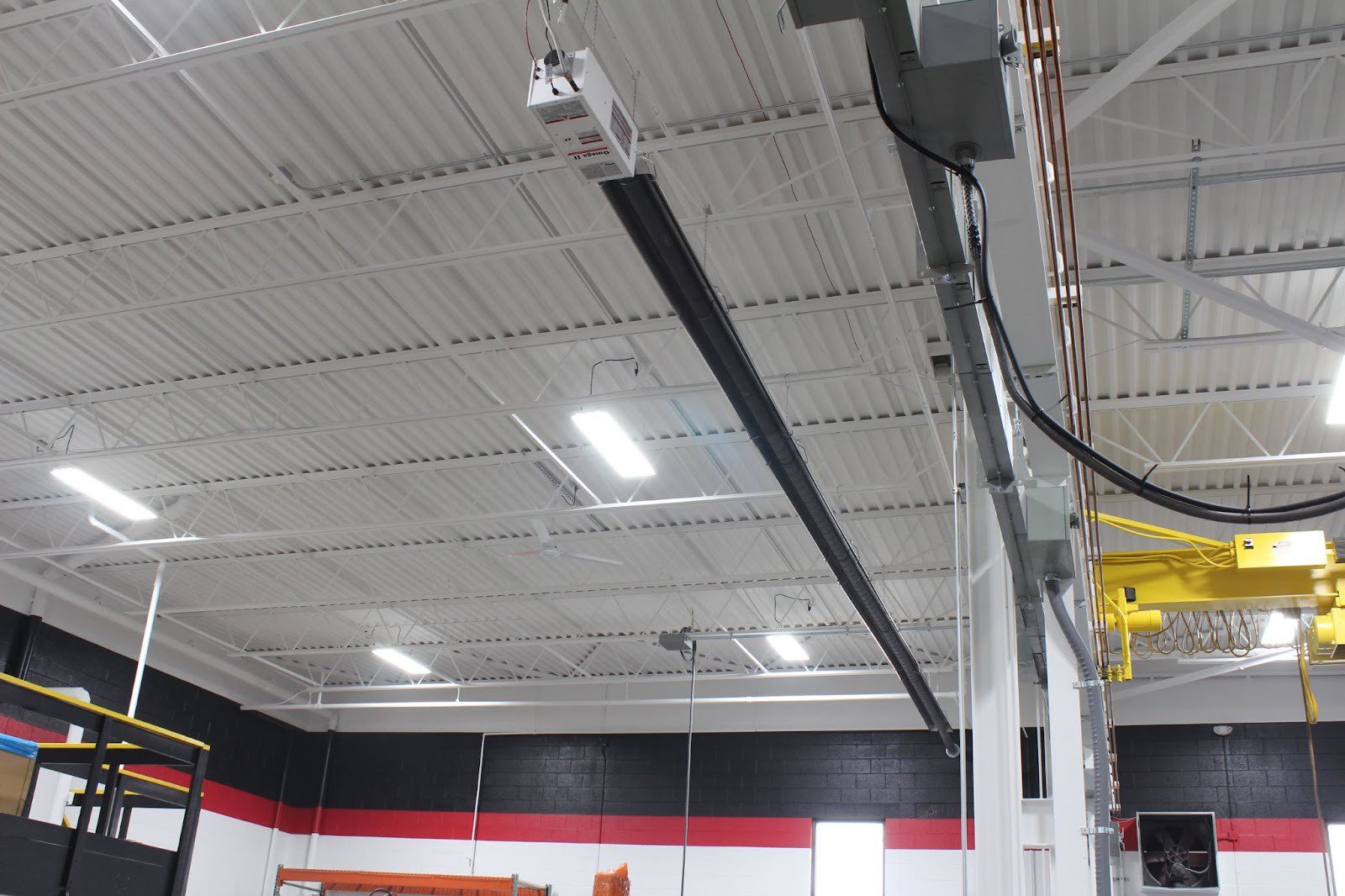
Combustion Research Corporation has built its engineering approach around removing those recurring triggers. Combustion Research Corporation documents that its Reflect-O-Ray® and Omega II® systems are engineered so combustion air filters are not required, because missed filter maintenance can lead to system failures and added expense.
The Hidden Tax of Filters in Commercial HVAC Repair
Filters can be a smart protection strategy in many HVAC contexts. The problem is when a heater depends on intake filters to run reliably in environments where dust, fibers, feathers, and fine particulates are part of daily operations. In those cases, filters become a service schedule and service schedules get missed.
When combustion air flow is restricted, controls may interpret it as an unsafe condition and shut the unit down. The facility then pays twice: once for the maintenance task itself, and again for downtime risk when a heater drops out during a cold snap. Combustion Research Corporation’s position is straightforward: remove that dependency so the heater can operate without a consumable-driven maintenance loop.

What to Verify During Submittals
Use questions that translate directly to operational risk:
- Does the heater require a replaceable intake filter to operate as intended?
- If airflow degrades, does the system trend toward nuisance lockouts?
- Can the equipment tolerate the building’s “real air,” or does it assume clean mechanical-room conditions?
Filter-Free Design as a Reliability Strategy
Combustion Research Corporation’s “no filters required” stance is not a convenience feature; it’s a reliability decision that reduces the number of routine interventions a facility must execute perfectly. For facilities managers, that typically means fewer avoidable after-hours calls and fewer “why is this unit down again?” investigations.
It also simplifies ownership planning. If a fleet of heaters does not rely on filter replacement cycles, preventive maintenance can shift toward inspection and safety checks rather than repetitive consumable handling at mounting height. That is the kind of “quiet reliability” that keeps Commercial HVAC Repair from becoming a recurring budget category.
Stopping Tube Failures: Dry-Tube Thinking and Optimum Efficiency
A second common repair driver in radiant heating is tube corrosion tied to condensation. The technical mechanism is well understood: dew point corrosion can occur when metal surface temperatures fall below the dew point of combustion products, allowing acidic condensates to form and attack the material.
Combustion Research Corporation’s framing of optimum efficiency is practical here. Instead of chasing the lowest possible exhaust temperatures as a marketing objective, the engineering objective becomes stable, dry internal conditions that protect tube life under real duty cycles. Combustion Research Corporation ties this approach to longevity and explicitly discusses avoiding condensate damage as part of its value proposition.
Material and Warranty Signals Engineers Can Spec
Combustion Research Corporation’s Omega II® 9K product information lists a 10-year warranty on radiant tubes for internally created corrosion, which is one of the cleanest spec-ready signals for lifecycle intent.

Combustion Research Corporation also states that its emitter tubing is designed for “optimum efficiency and output,” reinforcing that the design target includes long-term operating reality, not just a short-term rating.
Vacuum-Vented Safety: Reducing Risk and Simplifying Failure Modes
For large industrial footprints, the pressure regime of the system matters. Reflect-O-Ray® design documentation specifies that burners operate under negative (vacuum) pressure. In practical terms, negative pressure changes what happens in the event of a breach: the system tends to pull inward rather than push products of combustion outward.
That’s a risk-management detail facilities teams understand immediately, because it connects directly to safety, investigation scope, and how disruptive a fault event becomes. It also supports longer tube runs and large-area coverage strategies where predictable system behavior is part of operational planning.
Comparative Maintenance Snapshot for Commercial HVAC Repair Planning
The table below summarizes common downtime triggers and shows how Combustion Research Corporation’s documented design choices map to those triggers, so engineers can connect submittal language to maintenance outcomes.
| Category | Common Downtime Trigger in High-Particulate Facilities | Combustion Research Corporation Omega II® / Reflect-O-Ray® Reference |
|---|---|---|
| Air intake dependency | Filter clogging, restricted combustion air, lockouts | “Combustion air filters are not required” for Reflect-O-Ray® and Omega II® |
| Tube-life exposure | Condensation-driven internal corrosion over time | Combustion Research Corporation positions longevity around avoiding condensate damage (optimum efficiency framing) |
| Breach behavior | Positive-pressure leakage concern | Reflect-O-Ray® burners specified to operate under negative (vacuum) pressure |
| Lifecycle confidence | Shorter corrosion coverage shifts risk to owner | Omega II® 9K lists 10-year tube warranty for internally created corrosion |
Why a Smaller Manufacturer Can Reduce Commercial HVAC Repair Headaches
Big marketing does not keep equipment running at 2 a.m. What keeps equipment running is application fit, clear installation requirements, and access to people who can answer design-level questions quickly. Combustion Research Corporation emphasizes its long U.S. manufacturing legacy and an engineering-first approach aimed at reducing ongoing service burdens rather than creating maintenance dependencies.
That matters most on specialized projects: high-dust manufacturing, agricultural confinement, cold-storage support spaces, aircraft hangars, or any facility where uptime is more valuable than incremental first-cost savings. When the owner’s success depends on predictable heat, design choices that remove common failure triggers tend to show up fast in the maintenance log—in a good way.
The Engineer’s Approved Alternative Checklist
If you’re evaluating options and want to reduce Commercial HVAC Repair exposure, keep the checklist simple and enforceable in a spec:
- Does the system require intake filters to operate reliably in your environment?
- Does the manufacturer explain how the design manages condensation risk over the tube run and duty cycle?
- Is there spec language (warranty, pressure regime, documented features) that supports lifecycle intent rather than brochure claims?
Reduce Repair Exposure Before the Project Bids
If you want Combustion Research Corporation reviewed as an approved alternate, or you want engineering support to match heater selection and layout to your facility’s real operating conditions, reach out and connect with us here.