

May 19, 2026
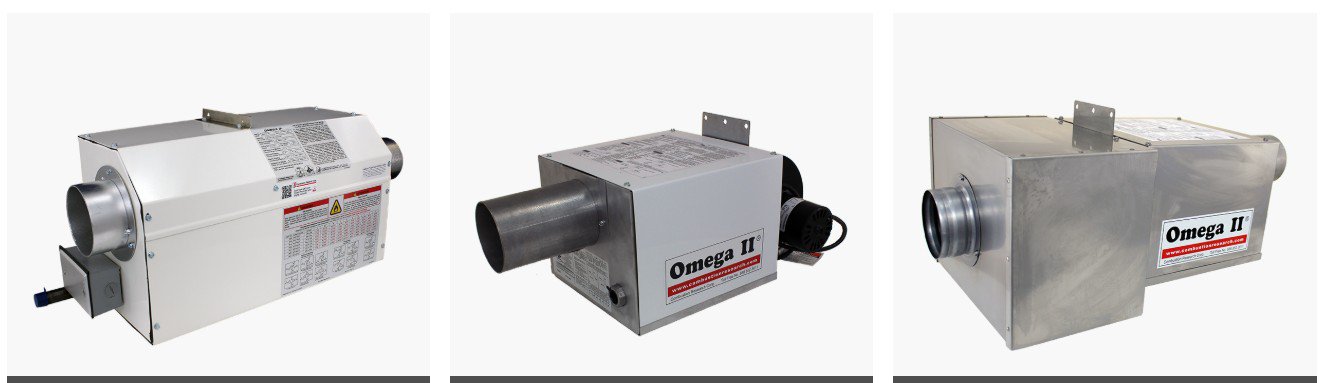
Radiant tube heaters use one of two airflow strategies: vacuum pull or forced draft push. Both move combustion gases through the system and out the flue, but they behave differently under real conditions. That difference shapes how each system performs, and it matters when specifying for commercial or industrial use. Forced draft systems place blowers at the burner end, which push combustion air and exhaust gases through the radiant tube under positive pressure. Any leak in the tube or flue connection pushes exhaust outward into the space. In occupied facilities, that characteristic deserves close attention during the specification process.
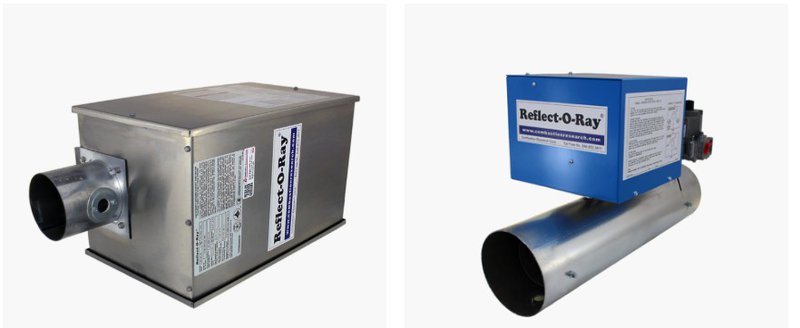
Meanwhile, vacuum systems work in the opposite direction. A blower at the exhaust end draws combustion gases through the tube under negative pressure. Any breach draws ambient air in rather than pushing exhaust out. That makes vacuum the safer default in occupied or sensitive environments, and it's why Combustion Research’s Reflect-O-Ray® uses vacuum exhaust as its standard configuration.
How Forced Draft Systems Perform in Practice
When considering a combustion or cooling setup for your facility, forced draft systems have real advantages in specific applications. The positive pressure they generate handles back pressure well in installations with long exhaust runs or multiple bends. They're also easier to balance across multi-unit configurations on long linear tube runs.
In agricultural settings, warehouses, and large open structures, forced draft systems deliver reliable performance at a competitive cost. Exhaust integrity is straightforward to maintain in those environments, and occupant sensitivity is typically lower. CRC's Omega II® is available in power-vented configurations that suit these applications well.
The tradeoff is joint integrity. Because the system runs under positive pressure, every connection in the tube and flue must hold a reliable seal. A loose joint in a vacuum system draws in ambient air and reduces efficiency. The same loose joint in a forced draft system, however, pushes exhaust into the building. That asymmetry is why vacuum systems are generally preferred in occupied commercial spaces. The American Society of Heating, Refrigerating, and Air-Conditioning Engineers (ASHRAE) helped determine standards on combustion air and ventilation in occupied buildings. This information is worth reviewing when weighing that tradeoff.
Vacuum Pull Systems and Where They Excel
Vacuum pull systems dominate commercial and industrial specifications for several reasons. The negative pressure design keeps exhaust contained even when connections loosen over time. Multiple units can also share a common exhaust manifold and a single roof penetration, which cuts installation cost and preserves roofing integrity in large facilities.
CRC's Reflect-O-Ray® vacuum exhaust design pairs that negative pressure approach with patented spiral low-mass tubing. That tubing heats up faster and reaches optimum radiant output sooner than conventional designs. The combination makes the Reflect-O-Ray® particularly effective in high-loss environments like aircraft hangars and large warehouses where doors cycle frequently. For more on how vacuum exhaust cuts roof penetration requirements in high-bay facilities, penetration comparisons in large-scale installations are instructive.
Forced Draft Systems in Multi-Zone Configurations
Forced draft systems offer useful flexibility in multi-zone configurations. Because the blower drives airflow rather than drawing it, the system handles back pressure variations across zones with different tube lengths or exhaust path complexity. That makes forced draft a practical choice when retrofitting existing structures where exhaust routing can't follow an ideal path.
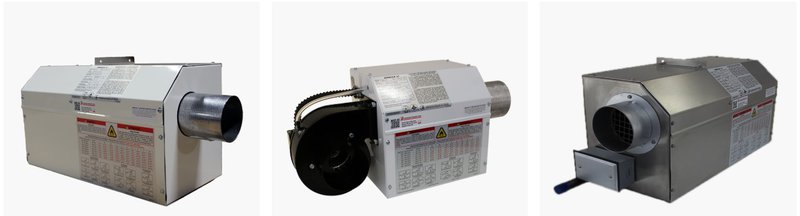
Dual-input forced draft configurations also allow staged firing across two BTU input levels, which improves efficiency during partial-load conditions. CRC's Omega II® dual-input models support this approach and suit facilities with variable heating loads across shifts or seasons. For a direct look at how single-stage and dual-input systems compare on efficiency, this side-by-side covers the key variables.
Matching the System to the Space
The choice between forced draft and vacuum pull comes down to four factors: exhaust path complexity, occupancy sensitivity, installation cost, and maintenance profile.
For occupied commercial spaces, sensitive manufacturing environments, and any facility where exhaust integrity is a compliance requirement, vacuum pull is the correct default. The negative pressure design provides a built-in safety margin that forced draft systems don't offer.
For agricultural buildings, large open warehouses, and retrofit installations with complex exhaust routing, forced draft systems are a practical and cost-effective option. The positive pressure design handles back pressure better and simplifies balancing across long tube runs.
Both system types are available through CRC's product line. Your project's heating load, exhaust path, and occupancy profile all factor into the right specification. Connect with CRC to work through the details for your next installation.