


May 20, 2026
Most radiant tube heater systems heat a space adequately. What separates a well-engineered one from an average one is how fast it recovers after a cold start or a door-open event. That recovery speed comes down to tube design, and it affects fuel consumption, comfort consistency, and system longevity in ways that show up in the operating bill every season.
Combustion Research Corporation (CRC) holds a patent on spiral low-mass radiant tubing. It heats up faster and reaches optimum radiant emitter output sooner than conventional tube designs. That faster recovery changes how the system performs in high-loss environments.
Why Tube Design Determines Radiant Tube Heater Performance
A radiant tube heater works by passing hot combustion gases through a suspended tube. The tube absorbs that heat and radiates it downward onto the floor, equipment, and people below. The speed at which the tube reaches optimum emitter temperature determines how quickly the system delivers useful heat to the space.
Conventional tubing uses a standard cylindrical cross-section with a full wall mass. The burner has to heat that entire mass before the tube surface reaches effective radiant output temperature. In a well-insulated building, that lag is manageable. In a high-loss environment like an aircraft hangar or a loading dock with frequent door cycling, however, that lag means fuel burned without useful output reaching the floor.
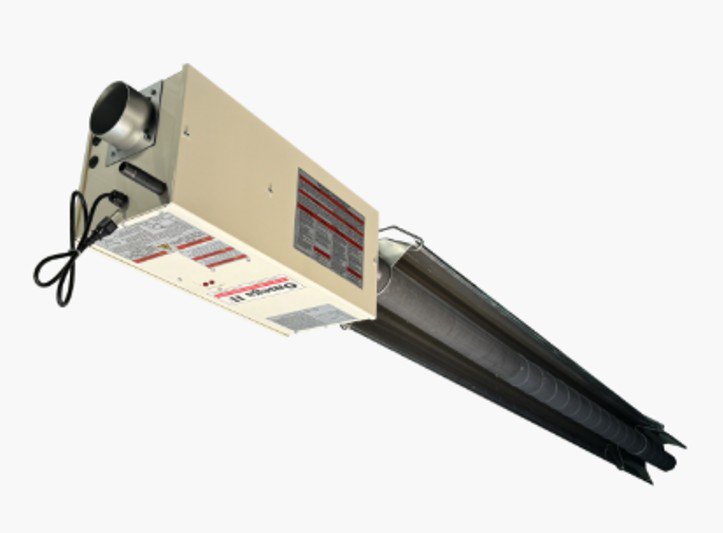
Spiral low-mass tubing reduces that lag by reducing the thermal mass the burner has to heat. The spiral geometry creates a thinner, lower-mass tube wall. It heats up faster for the same British Thermal Unit (BTU) input. More of the fuel consumed delivers radiant energy to the space rather than heating the tube itself. For more on how heat recovery speed affects operating costs in high-loss environments, recovery speed analysis in high-bay applications covers the key variables.
The Efficiency Case for Spiral Low Mass Tubing
The efficiency advantage compounds across the operating life of a radiant tube heater system. Every time the burner cycles, faster heat-up time means less fuel consumed before useful radiant output begins. In a facility where the burner cycles dozens of times per shift, that per-cycle gain adds up over a heating season.
CRC's systems consistently deliver fuel savings of 30 to 50 percent compared to forced-air alternatives, and spiral low-mass tubing contributes to that performance. Faster heat recovery also means more consistent zone temperatures between cycles, which reduces the swings that trigger additional burner cycles.
For a look at how infrared performs in high-bay environments, browse hangar heating applications at CRC to view the specific performance variables.
How Spiral Tubing Prevents Premature Tube Failures
Beyond heat recovery speed, spiral low-mass tubing addresses a failure mode common in conventional radiant tube heater systems: condensate damage.
Some systems maximize thermal efficiency by extracting as much heat as possible from combustion gases before they exhaust. That produces condensate, a corrosive liquid that forms when exhaust gases cool below their dew point inside the tube. Condensate attacks the tube wall from the inside, accelerating corrosion and causing premature failure. The efficiency gains from maximum extraction are real, but replacement cost and downtime offset them when the tube fails.
CRC's engineering philosophy prioritizes optimum efficiency over maximum efficiency. The spiral low-mass tubing design operates at exhaust temperatures that avoid condensate formation entirely. The tube stays dry throughout the operating cycle, which eliminates the corrosion mechanism that shortens tube life in condensate-producing designs. Federal energy research identifies system durability and maintenance profile as key factors in the long-term economics of radiant heating. That's why CRC backs its systems with a ten-year tube warranty.
Spiral Tubing Across CRC's Radiant Tube Heater Line
CRC's patented spiral low-mass tubing is standard across both the Reflect-O-Ray® and Omega II® product lines. The heat recovery and condensate-resistance benefits apply whether the installation calls for vacuum-vented or power-vented configuration, stainless steel or powder-coated finish, or single-stage or dual-input firing. That radiant tube heater flexibility means a single manufacturer covers the full range of installation types from small agricultural to large industrial high-bay.
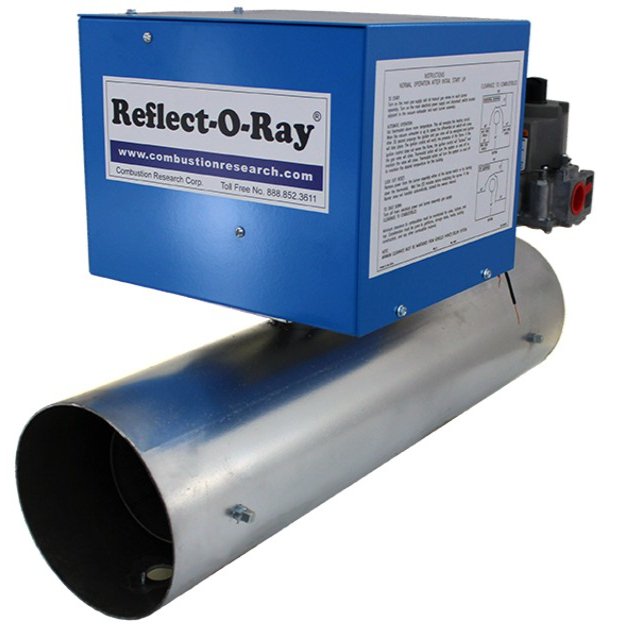
For high-bay applications, the Reflect-O-Ray® 6.0 handles ceilings above 20 feet. It delivers the spiral tubing heat recovery advantage at the scale those applications demand. Utility drop installations in high-bay facilities are reduced by up to two-thirds compared to competing systems, which compounds the installation cost advantage on top of the operating cost benefits.
For agricultural, greenhouse, and lower-ceiling commercial applications, the 3.5 and 4.0 configurations bring the same spiral tubing technology to smaller footprints. For more on how tube length and BTU input interact across CRC's configurations, system specifications cover the key variables for each model.
Specifying a Radiant Tube Heater With Spiral Low Mass Tubing
When specifying a radiant tube heater system, tube design deserves as much attention as the BTU rating and tube length. A system that reaches optimum emitter output faster delivers more consistent comfort and burns less fuel per cycle. It also carries a lower lifetime maintenance burden than a conventional tube design of equivalent capacity.
The condensate question is worth raising during the specification process. A pre-dilution exhaust temperature above 450°F reliably indicates a system not engineered to avoid condensate. That's a sign of poor design, not high efficiency. It predicts shorter tube life and higher maintenance costs regardless of the upfront price.
CRC's spiral low-mass tubing eliminates both problems by design. If you're evaluating a radiant tube heater for your next project, CRC's specification team can walk you through the options for your specific application.