

May 22, 2026
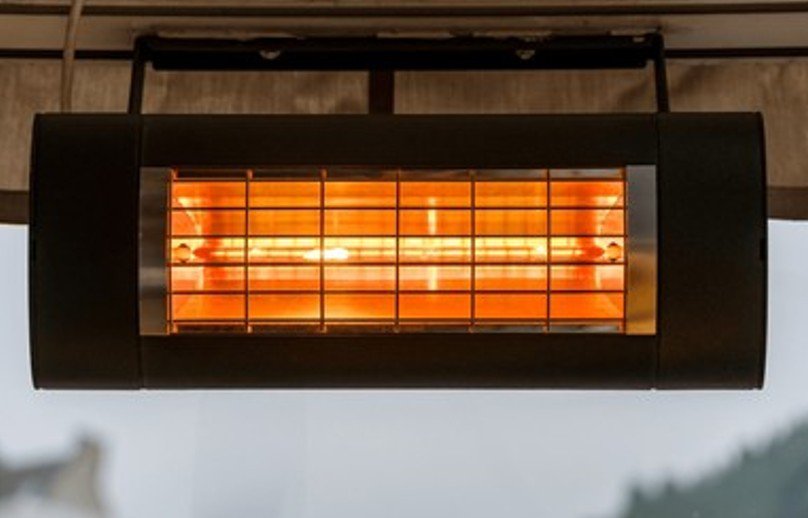
Construction schedules won't pause for cold weather, but productivity will go down when workers can't stay warm. Portable infrared heaters give site managers a flexible way to maintain working conditions in enclosed or partially enclosed spaces. Even better, it does so without the need for permanent installations or additional ductwork.
Unlike forced-air units that heat the air and lose it the moment a door opens, infrared directs radiant energy at surfaces and people in the work zone. The floor slab, framing materials, and workers absorb that energy and retain it. A temporary enclosure heated with infrared recovers faster after a disruption and holds more consistent temperatures throughout the shift.
Where Portable Infrared Heaters Fit on the Job Site
Outside of keeping workers warm, concrete curing is among the most critical applications for portable infrared heaters. Fresh concrete needs to stay above 50°F during the curing period to develop full strength. Forced-air systems create uneven temperature distribution and move air that accelerates surface drying before the concrete has set. Infrared delivers consistent radiant heat to the slab without disturbing the air above it. That produces more uniform curing conditions and reduces the risk of cold joints or surface cracking.
Enclosed framing and finishing work is another strong fit. Drywall, paint, adhesives, and flooring materials all have minimum temperature requirements for proper application and curing. A portable infrared unit maintains the zone temperature those materials need without the noise and airflow of a nearby forced-air unit. CRC's infrared systems perform consistently across a wide range of temperature-sensitive applications.
Equipment and material staging areas benefit from infrared as well. Keeping hydraulic systems, batteries, and adhesives within their operating temperature range reduces failures and material waste on cold-weather projects.
Fuel Options for Temporary Heat
Propane is the most common choice on sites without natural gas service. It's portable, energy-dense, and widely available. The tradeoff, however, is tank management; high-demand applications on large sites burn through propane quickly. Coordinating refills adds a logistics burden to an already strained workforce. For smaller enclosures or spot heating, propane-fired portable infrared heaters are hard to beat for simplicity and output.
Alternatively, natural gas offers the better option when a supply line is available on site. It eliminates tank management and costs less per BTU than propane. Many contractors running large cold-weather projects spec natural gas infrared as their primary temporary heat source. Fuel selection for temporary and permanent systems follows similar principles and is worth reviewing before committing to equipment.
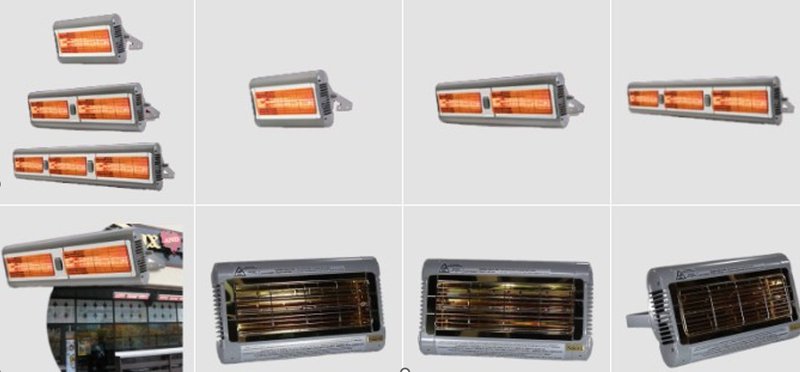
Electric infrared suits enclosed spaces where combustion exhaust is a concern, such as interior finishing in near-complete buildings. CRC's Solaira Alpha Series delivers zero-emission infrared output with no combustion byproducts, which makes it well suited to those conditions.
Sizing Portable Infrared Heaters for Temporary Enclosures
Temporary enclosures on construction sites leak aggressively, change shape as work progresses, and put heating equipment through conditions that permanent installations never face. Sizing starts with a conservative heat loss estimate that accounts for enclosure material, surface area, and expected infiltration rate.
Poly enclosures lose heat far faster than rigid insulated panels. The BTU requirement for a poly-wrapped concrete pour is substantially higher than for a finished framed space of the same square footage. Oversizing is less of a concern with portable units, since temporary enclosures tolerate extra capacity. Undersizing, however, consistently produces poor results. For more on how heat loss calculations apply to open-volume structures, heat loss fundamentals for large-space applications are worth reviewing before finalizing equipment selection.
Safety on the Job Site
Portable infrared heaters on construction sites operate around combustible materials, limited ventilation, and variable foot traffic. Clearance requirements for low-intensity radiant tube heaters are well documented and apply whether the installation is permanent or temporary. CRC's Reflect-O-Ray® and Omega II® systems carry clearance specifications for both configurations. Sealed combustion units are the right choice for enclosed or partially enclosed spaces where combustion air quality matters. The US Occupational Safety and Health Administration (OSHA) sets specific safety and ventilation standards for temporary heat equipment on job sites that vary by application type.
Plan ventilation carefully from the start. Even sealed combustion units need adequate fresh air for proper operation. Temporary enclosures that restrict airflow affect combustion quality and can raise carbon monoxide levels. Building a fresh air provision into the enclosure design upfront is easier than troubleshooting combustion problems after the equipment is running.
When you're ready to spec temporary heat for your next cold-weather project, CRC's team can help you identify variables worth getting right before equipment hits the site. Contact us today and we’ll be happy to schedule a consultation soonest.