

May 25, 2026
Specialty crop growers in controlled environments face a heating problem that general-purpose systems aren't built to solve. Temperature consistency at the root zone and canopy level directly affects germination rates, growth cycles, and final yields. An infrared greenhouse heater addresses that requirement more precisely than forced-air alternatives, and the performance difference shows up in the crop.
Forced-air systems heat the air mass inside a greenhouse and rely on air movement to spread warmth. That works in tightly sealed buildings, but greenhouses leak aggressively. The air movement itself creates drafts that stress plants. Transpiration rates climb under draft conditions, drawing moisture from leaves faster than roots can replace it. The result is crop stress that shows up as slower growth and reduced yields.
Combustion Research Corporation (CRC) manufactures infrared greenhouse heater systems across its Reflect-O-Ray® product line, with tube length and British Thermal Unit (BTU) configurations suited to a range of greenhouse footprints and crop types.
Why Temperature Consistency Drives Specialty Crop Yields
Specialty crop growers often focus on hitting a target average temperature, but average temperature tells only part of the story. What matters for yield is temperature consistency across the growing zone, both spatially and over time.
Forced-air systems cycle between hot blasts and cool periods as the thermostat triggers the burner on and off. Plants near the air discharge experience higher temperatures and faster moisture loss. Plants at the far end of the greenhouse may sit in cooler, stagnant air. That variation creates uneven growth conditions across the same crop and makes uniform quality at harvest harder to achieve.
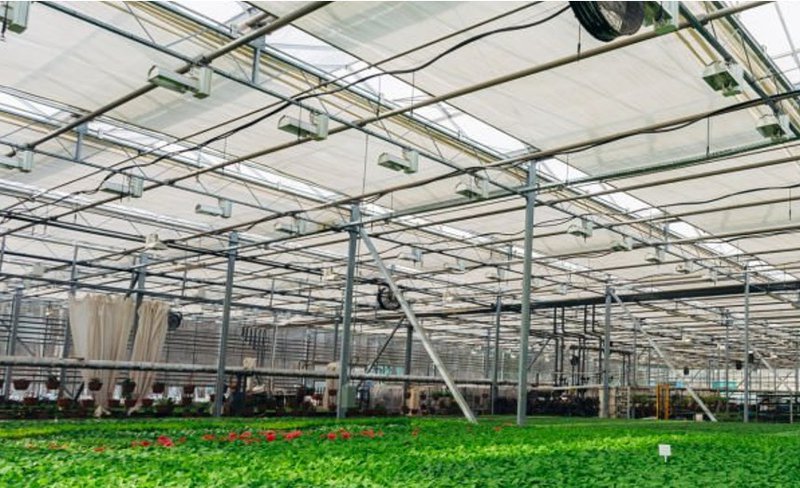
An infrared greenhouse heater addresses this by heating the growing medium, benches, and plant mass directly. Radiant energy distributes evenly across the growing zone without creating air movement. Temperatures at plant level stay more consistent between burner cycles because the floor and bench mass hold stored heat and release it gradually. For more on how radiant energy distribution affects crop performance in controlled environments, greenhouse heating applications at CRC cover the key principles.
Infrared Greenhouse Heater Benefits: Humidity Control and Disease Pressure
Humidity management is another area where an infrared greenhouse heater outperforms forced-air systems. Forced-air units push warm, dry air through the growing space, which lowers relative humidity and stresses moisture-sensitive crops. When the system cycles off and temperatures drop, condensation forms on plant surfaces and structures. That wet-dry cycling creates favorable conditions for fungal pathogens, which rank among the leading causes of crop loss in controlled environment agriculture.
Infrared heating maintains a more stable temperature profile throughout the growing cycle, which reduces the amplitude of wet-dry swings. Because there's no forced air movement, humidity distributes more evenly across the growing zone. Growers using infrared greenhouse heaters consistently report lower disease pressure compared to forced-air heated facilities. That translates directly to reduced fungicide use and higher marketable yields. US Department of Agriculture research documents proves the relationship between temperature consistency and disease incidence in controlled environment crop production.
Extending Growing Seasons and Crop Cycles
One of the most direct ways an infrared greenhouse heater improves economics is by enabling reliable season extension. In colder climates, forced-air systems often struggle to maintain consistent temperatures during overnight lows. The leaky greenhouse envelope loses heat faster than the system can replace it.
Infrared holds its ground better in those conditions because it heats the thermal mass of the floor and growing structures rather than the air. When outdoor temperatures drop sharply, stored heat in the floor and benches continues to radiate into the growing zone. That buffers the temperature drop and gives the burner time to recover. The effect is particularly valuable in early spring and late fall, when a single cold night can be the difference between a protected and a damaged crop.
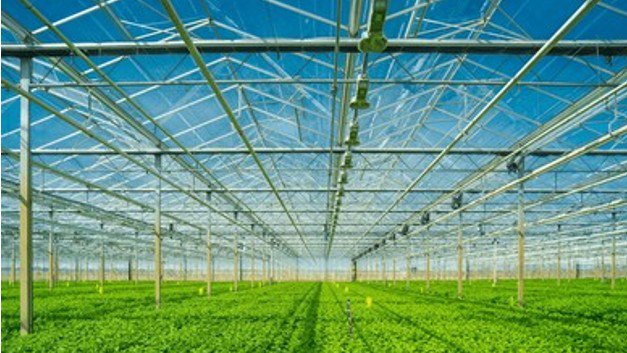
For specialty crops with long growing cycles or high per-unit value, extending the season by several weeks at either end adds meaningful revenue without proportional increases in input costs. For a closer look at how radiant heating supports season extension, agricultural heating solutions at CRC cover the application in detail.
Selecting an Infrared Greenhouse Heater for Specialty Crops
Matching an infrared greenhouse heater to a specialty crop operation starts with an accurate heat loss calculation for the specific structure. Greenhouse envelopes vary widely in thermal performance depending on glazing type, frame material, and orientation. A single-layer poly house loses heat far faster than a double-poly or glass structure of the same footprint.
CRC's Reflect-O-Ray® 3.5 tube length suits lower-ceiling greenhouse environments well. It works particularly well for benched crops where the radiant target is the bench surface and root zone. The 4.0 configuration suits taller growing environments that need a longer radiant throw. CRC's online calculators support accurate heat loss estimation before finalizing system selection. For more on how tube length and BTU input interact in agricultural sizing, check out our other articles.
Also worth noting: CRC's filter-free design removes a maintenance burden that forced-air greenhouse systems accumulate quickly in dusty growing environments. Filters that go unmaintained in a greenhouse reduce system effectiveness at exactly the times of year when consistent heat matters most.
If your specialty crop operation is losing yield to temperature inconsistency or disease pressure, we at CRC can help you spec a system that addresses both. So contact us today and let’s talk about your specific requirements.