

June 29, 2026
The sun has heated the Earth for billions of years without a furnace, a duct, or a fan. It does this through infrared radiation. Understanding what is infrared and how it transfers energy explains why radiant heating outperforms convective systems in virtually every large-volume application. The physics that make it work are also the reason it is the most natural choice for large open spaces.
What Is Infrared Energy?
Infrared is a form of electromagnetic radiation. It sits just beyond the red end of the visible light spectrum, which is why human eyes cannot detect it. However, the body registers it immediately as heat. The sun delivers more than half of its total energy output to Earth in the infrared range. Every warm object emits infrared radiation, and the higher the surface temperature, the more energy it radiates outward.
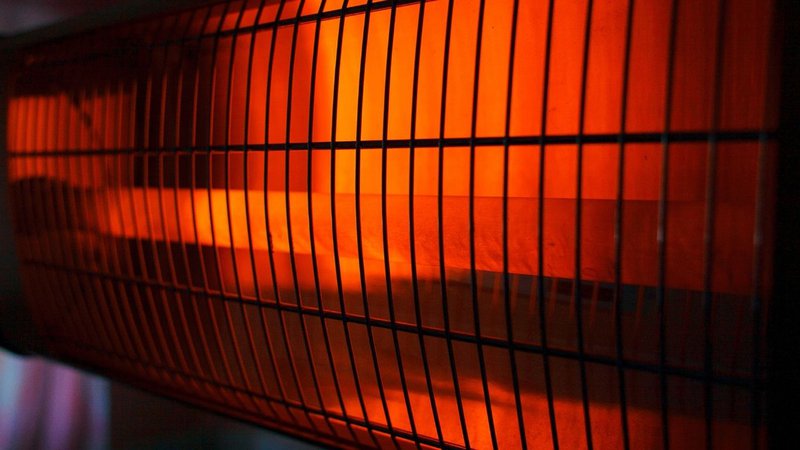
The National Aeronautics and Space Administration (NASA) describes infrared waves as part of the electromagnetic spectrum that people encounter every day. They’re detected not by sight but by the sensation of heat. This is not a manufactured phenomenon. It is the most fundamental way energy moves through space. What distinguishes infrared from convective heat transfer is, specifically, the absence of a medium. Convection requires air or fluid to carry heat. Infrared does not. It travels in straight lines from a warm emitter to whatever surface lies in its path. Consequently, it delivers heat without warming the air first.
Why Large Open Spaces Challenge Conventional Heating
Large open spaces expose the core weakness of convective heating. Warm air rises. In a warehouse or manufacturing plant with 20 to 40-foot ceilings, heat from a forced-air system migrates upward before it reaches people and surfaces. The system then runs harder to replace that lost heat. Furthermore, it burns more fuel to hold a floor-level temperature that the physics of convection actively work against.
Large open spaces also carry significant air infiltration. Loading dock doors, overhead doors, and ventilation openings allow cold air in and warm air out. Each exchange depletes the thermal energy a convective system worked to build. The larger and leakier the space, therefore, the greater this cycle of loss.
Infrared heating sidesteps these problems. Because radiant energy transfers directly to surfaces and occupants, it does not depend on maintaining a warm air mass in the building. The floor, equipment, and structural mass absorb infrared energy and store it. That stored heat then radiates back into the occupied zone, creating warmth that persists even when cold air enters the space.
What Is Infrared Doing That Forced Air Cannot?
The practical difference shows up in energy consumption. The DOE notes that radiant heating is generally more efficient than forced-air systems because it eliminates duct losses and delivers heat directly to occupants. In large open spaces, moreover, that efficiency advantage grows with building volume and ceiling height. Those are the conditions where stratification losses in forced-air systems are highest.
CRC's low-intensity radiant tube systems deliver fuel savings of 30 to 50 percent compared to conventional forced-air systems. In high-bay facilities specifically, the gap between radiant and forced air is at its widest. A radiant system heats the floor mass, which acts as a thermal reservoir, and in turn re-radiates heat upward throughout the occupied zone. That reduces the load on the system over time.
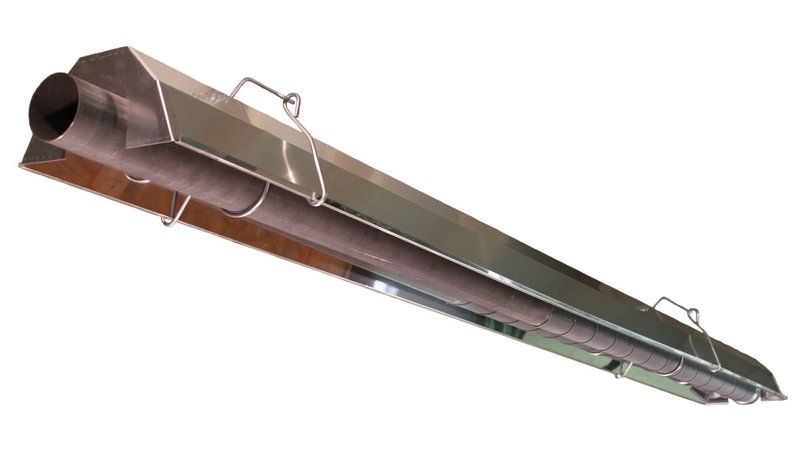
Additionally, radiant heat does not create air movement. Large open spaces often have workers who stay stationary for long periods. Drafts lower perceived temperature and increase discomfort at workstations. In contrast, radiant delivery produces warmth without air disturbance. As a result, thermal comfort improves at the occupant level without raising the ambient air temperature of the full building volume.
The Natural Fit for High-Bay and Open-Volume Buildings
The alignment between what is infrared and what large open spaces require is not coincidental. Large spaces need heat that travels across distances without depending on air. Infrared does exactly that. They need heat that warms surfaces and people directly without conditioning the full overhead air volume. Similarly, they need a system that holds up under air infiltration and door cycling. Radiant-warmed thermal mass handles that better than any forced-air approach.
This is why radiant infrared has become the standard in the most demanding large-volume applications. Aircraft hangars, high-bay warehouses, manufacturing plants, agricultural barns, and large commercial structures all share the same heating physics. These are not niche uses. They represent the core application profile for which overhead radiant heating was built.
Specifying Infrared for Large Open Spaces
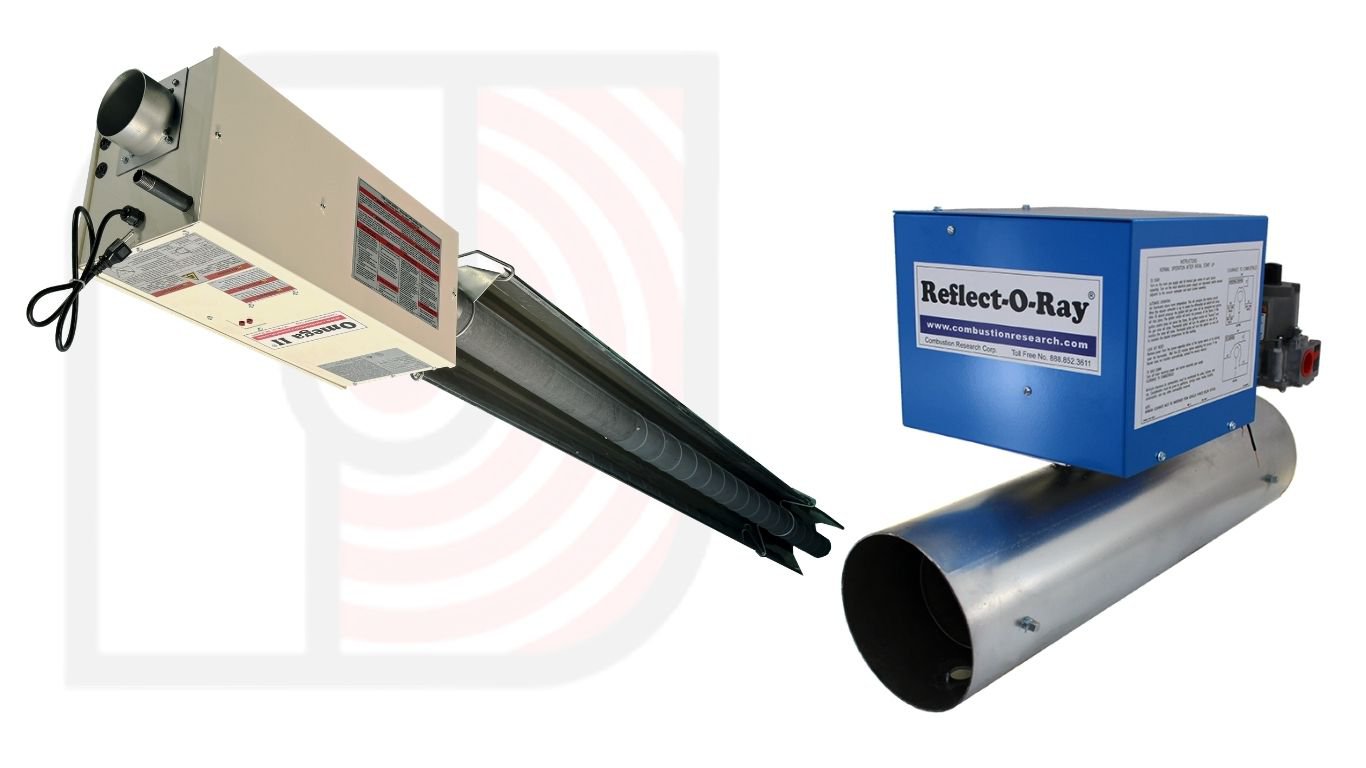
The principles that make infrared the natural choice also guide the specification process. Ceiling height, building envelope quality, occupancy patterns, and door cycling frequency all factor into system design. CRC's Reflect-O-Ray product line covers the tube lengths and BTU inputs needed to match those variables in real buildings. The step-by-step mechanics of how radiant tube heaters convert gas into floor-level warmth are a useful context for any engineer evaluating system options.
For large open spaces where whole-building forced-air heating has underperformed, infrared is not merely an alternative. It is a fundamentally better match for the physics of the problem. To discuss a system specification for your facility, contact us today.