

June 26, 2026
In a pole barn housing 200 sows, a three-degree overnight temperature drop can trigger respiratory stress across the herd. A poorly specified heating system will either fail to compensate or burn through fuel doing it. The right barn heaters can make a difference, as radiant infrared delivers consistent warmth at the animal level and not just at the thermostat.
Why Radiant Infrared Outperforms Forced Air in Barn Environments
Forced-air systems heat the air inside a barn. However, that air won’t remain still as doors continually open and close for feeding. In addition, ventilation fans cycle on and off. Every time air exchange pulls warmth out of the building, the system starts over.
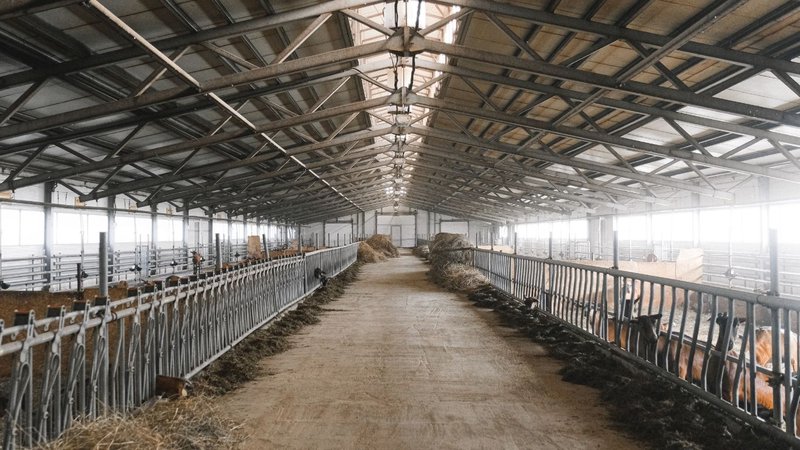
Radiant infrared works differently. Instead of heating the air, it heats objects and floor mass directly: concrete slabs, bedding, and livestock. That floor mass stores heat and re-radiates it steadily. As a result, temperatures hold even when ventilation disrupts the air column above.
For facilities managers overseeing large agricultural operations, that distinction translates directly into fuel costs. CRC infrared systems can deliver fuel savings of 30 to 50 percent compared to forced-air alternatives. In a barn running heat through a Michigan winter, that margin matters.
Matching Barn Heaters to Your Structure
Not every agricultural building has the same ceiling height, construction material, or livestock density. Matching barn heaters to those variables, therefore, determines whether a system performs or not..
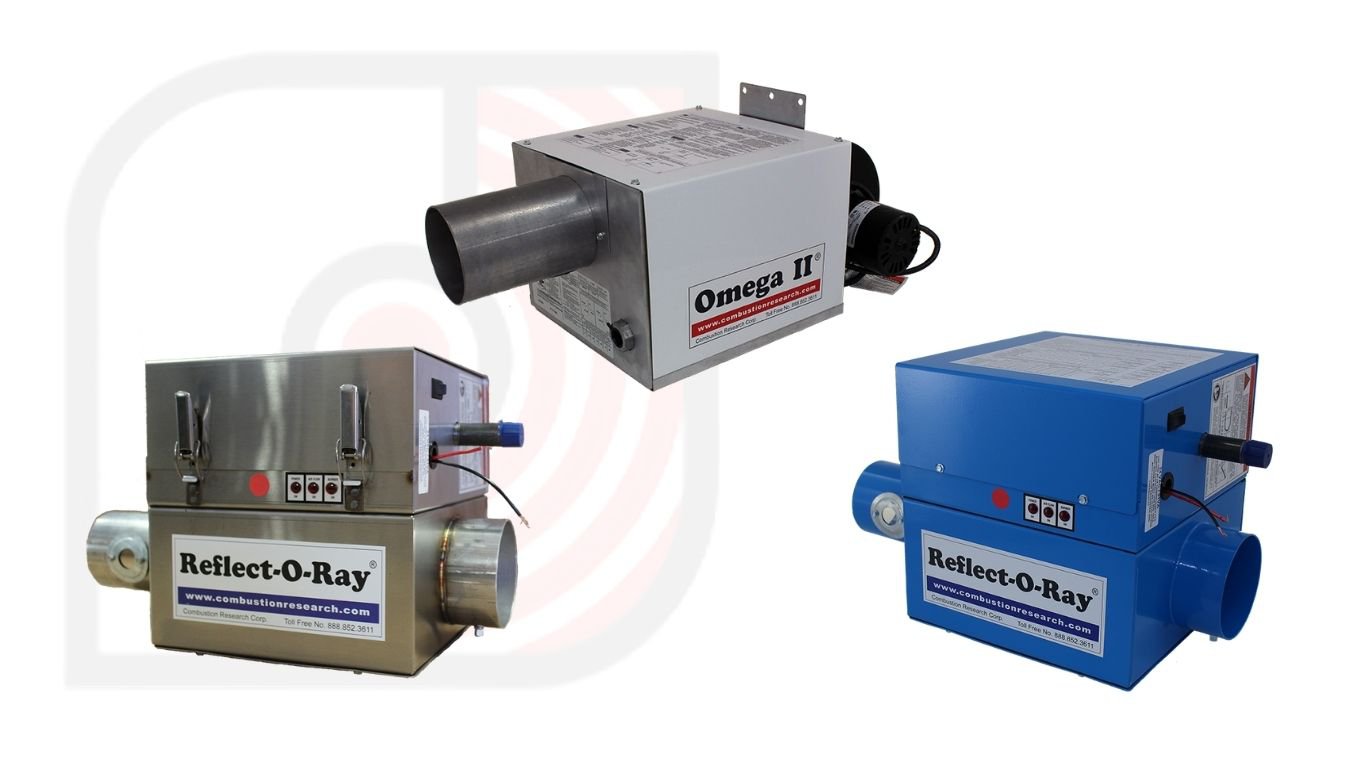
Pole barns and open-span structures benefit from low-intensity radiant tube heaters installed overhead. The Reflect-O-Ray Engineered Design System (EDS) directs radiant energy downward via reflectors, heating the floor mass and the animals above. For lower-ceiling configurations, the Reflect-O-Ray 4.0 EDS provides strong coverage. High-span structures with ceilings above 20 feet, however, are better served by the Reflect-O-Ray 6.0 EDS, designed for high-bay applications.
Remote agricultural sites without natural gas access also have a strong option: the Reflect-O-Ray OIL EDS. It is an oil-fired variant of the same low-intensity radiant system. Its performance matches the gas-fired line. For that reason, it is a reliable choice for barns where gas supply infrastructure is not available.
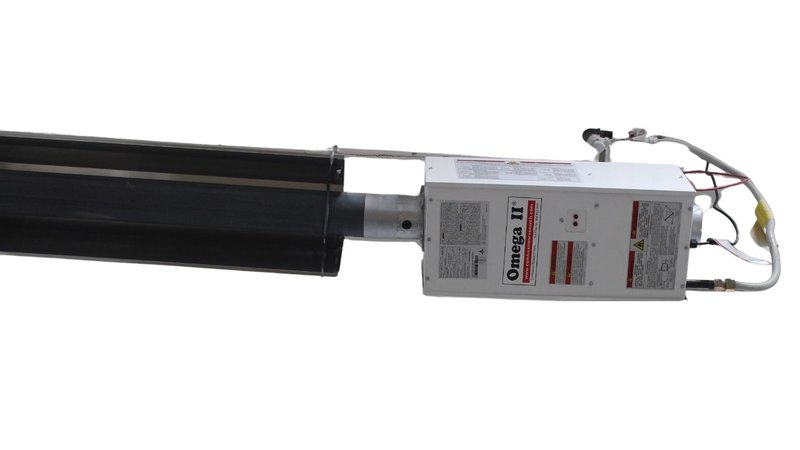
Stables and smaller livestock enclosures generally need less total British Thermal Unit (BTU) output. They also benefit from precise zone control. The Omega II Pre-Engineered Package offers a power-vented alternative to vacuum systems. Its single and dual-input configurations allow consistent temperature control across variable load environments.
The Maintenance Factor in Agricultural Heating
Barn environments are usually hard on mechanical systems. Ammonia off-gas from animal waste, dust, humidity, and temperature cycling all help accelerate wear. For this reason, maintenance requirements deserve as much weight as upfront cost when specifying barn heaters.
Combustion Research Corporation (CRC) is a trusted manufacturer known for its high-efficiency industrial and commercial heating solutions. CRC engineers its Reflect-O-Ray and Omega II systems without combustion air filters. By contrast, competing systems require regular filter replacement. Moreover, filter-driven repair costs accumulate quickly when filters go unmaintained, reducing effectiveness and increasing the risk of total system failure. CRC eliminates that failure point entirely. The result, therefore, is a system that operates reliably in high-particulate agricultural environments without the maintenance burden that filter-dependent designs carry.
CRC also builds around a dry tube design philosophy. Some manufacturers push exhaust temperatures low enough to produce condensate. That condensate is acidic and corrosive. It destroys radiant tubing from the inside out over time. CRC prioritizes optimum efficiency instead, avoiding condensate entirely. Every unit ships after individual testing rather than spot-checking. The case for long-term performance rests on that foundation. Each unit carries a ten-year radiant tube warranty and a three-year burner control warranty.
Clearances, Placement, and Code Compliance for Barn Heaters
Overhead radiant heaters in agricultural settings must meet clearance requirements for livestock safety, structural protection, and code compliance. Heating, ventilation, and air conditioning (HVAC) engineers and contractors specifying barn systems must confirm minimum clearance distances. Those distances apply to combustible materials and livestock areas alike. Positioning also affects heat distribution. System layout, therefore, must account for the thermal footprint of each unit.
Some facilities house compressed natural gas (CNG) or liquefied natural gas (LNG) vehicles alongside livestock. For those operations, NFPA standard 30A section 7.6.6 applies. It sets the maximum allowable tube or surface temperature at 750 degrees Fahrenheit for specialty fuel vehicle repair buildings. CRC manufactures Reflect-O-Ray units certified to meet this standard. Moreover, CRC is one of the few manufacturers with products approved for mixed-use facilities with specialty fuel vehicle compliance requirements.
Sizing Your System for Agricultural Load
Proper BTU sizing for a barn depends on building volume, insulation values, construction material U-values, and expected outdoor temperature minimums. Under-sized systems run continuously without reaching the setpoint. Over-sized systems, by contrast, cycle too frequently, creating temperature swings that stress animals and increase mechanical wear.
The United States Department of Agriculture (USDA) recognizes that infrastructure climate control is a direct factor in livestock health outcomes. Facility design, therefore, must match both current and projected environmental conditions. For agricultural operators in cold climates, that makes proper heat load calculation a baseline requirement, not an afterthought.
CRC provides engineering resources for load calculation. Its representatives can also assist with system sizing for specific applications. HVAC engineers can furthermore reference CRC product specifications to confirm system compatibility with project requirements. Facilities managers can also review guidance on lifetime operating expenses to quantify the impact across the full system life.
For livestock operations where heating reliability directly affects animal health and production performance, the specification decision is worth getting right. Radiant infrared systems built without filters, without condensate risk, and backed by a decade-long tube warranty carry a measurable advantage. They ultimately outperform systems that trade long-term durability for short-term efficiency numbers. To find the right CRC configuration for your barn, reach out to learn more.