

April 15, 2026
American industry has changed dramatically since the mid-20th century. Large corporations restructured. Supply chains shifted overseas. Many specialized producers quietly disappeared. A family-owned manufacturing company that survives seven decades builds something rare. Institutional knowledge, earned trust, and a commitment that outlasts market cycles cannot be purchased overnight.
Combustion Research Corporation (CRC) is one such story. Founded in 1952 and headquartered in Rochester Hills, Michigan, CRC has spent over 70 years refining low-intensity infrared heating systems. Their longevity reflects a broader truth about what makes certain American producers resilient.
How American Manufacturing Companies Have Evolved Over the Decades
The post-World War II era launched a productive age of domestic output for any manufacturing company. American factories supplied global demand. Regional producers served local needs with precision. Over the following decades, automation, offshoring, and consolidation reshaped the industrial landscape.
Smaller operations faced intense pressure to scale up or shut down. Many folded into larger conglomerates. Others doubled down on engineering focus. Niche firms with deep domain expertise proved far harder to displace. Their survival depended on depth of knowledge, not volume alone.
Heating may not seem like a high-profile field. Yet the companies that mastered low-intensity radiant infrared heating became indispensable to architects, facility managers, and industrial operators. Those that endured did so through careful, strategic positioning.
The Role of Family Ownership in Long-Term Industrial Success
Family businesses account for a substantial share of U.S. GDP. Their structure creates distinct advantages over publicly traded rivals. Decision-making in a manufacturing company tends to be faster. Long-term planning replaces short-term quarterly pressure. Client and vendor relationships are maintained across generations.

These traits matter deeply in technical manufacturing. When an engineer specifies a heating system, they are trusting years of product development and accumulated field experience. A family-owned operation with consistent leadership delivers accountability that broader organizations often cannot match.
Family businesses also carry a personal reputation. Errors are not absorbed into a corporate structure. This creates a strong incentive to get things right from the outset.
CRC exemplifies this model. The same core values that shaped the company in 1952 still guide it today. Engineers and architects who work with CRC gain a partner invested in long-term outcomes.
Specialization as a Competitive Advantage for Manufacturing Companies
The most enduring manufacturing companies are rarely the biggest. They are the most focused. Specialization allows a producer to deepen engineering capability and build credibility within a target sector.
In the heating industry, this means understanding radiant heat transfer, building envelope performance, and site-specific design requirements. HVAC professionals and architects depend on these competencies when selecting systems for industrial, agricultural, or commercial facilities.
CRC has applied this philosophy throughout its history. Internal resources are concentrated entirely on infrared heating. Generalist firms struggle to match that level of dedication. Those seeking detailed application guidance can explore CRC's infrared heating solutions to see the technical depth behind each design.
CRC's Product Heritage: Engineered for Performance
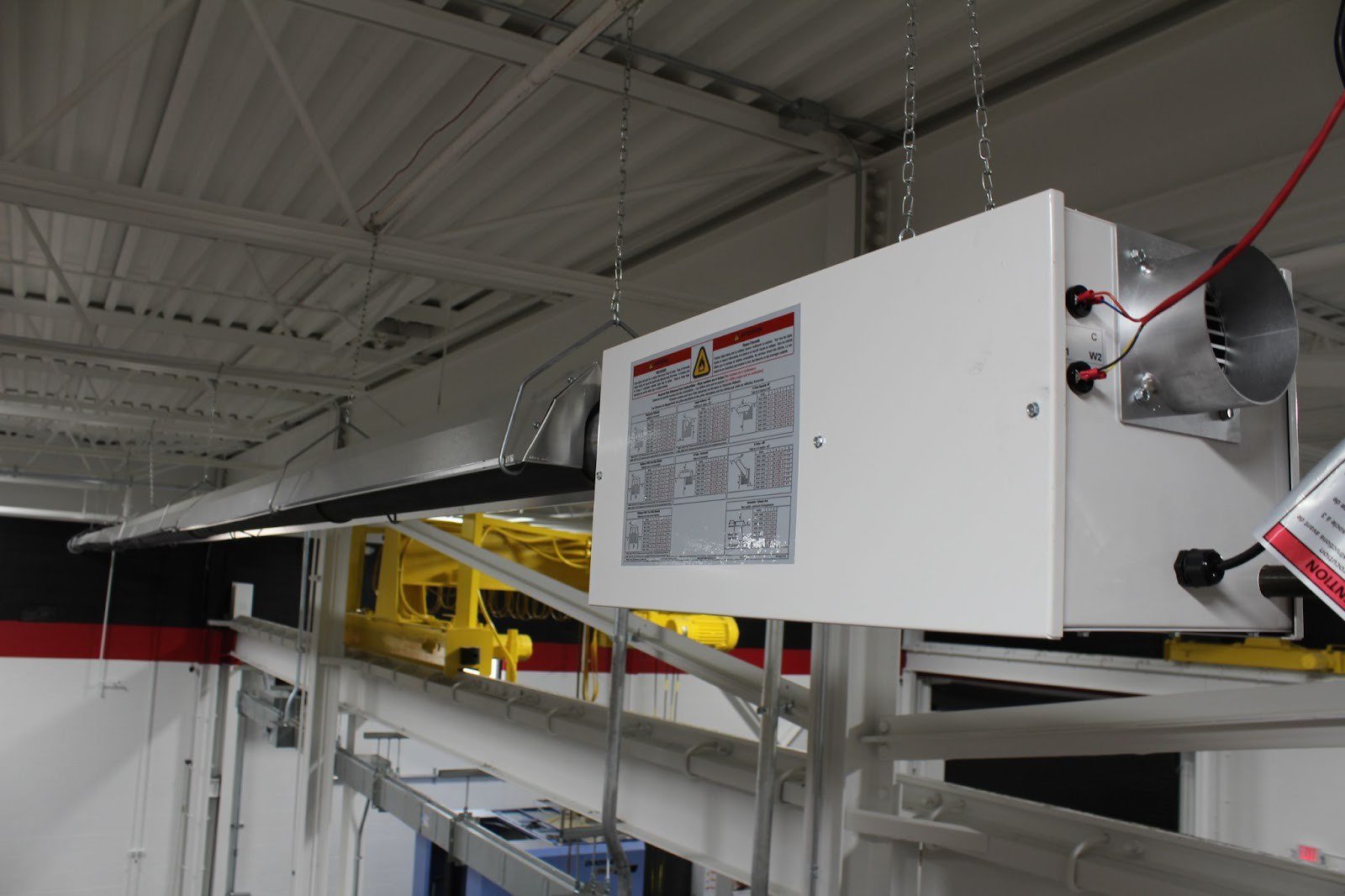
CRC's portfolio is a direct reflection of its history. The Reflect-O-Ray® system is a vacuum-vented low-intensity infrared tube heater. It delivers steady radiant warmth across expansive industrial and commercial spaces. The Omega II® series offers a pre-engineered option for assignments requiring faster deployment without sacrificing output quality.

Both systems share foundational design priorities:
- Energy efficiency and reduced fuel consumption
- Long operational life with minimal upkeep requirements
- No required filter replacements or condensation-related tube failures
The Serengeti-IR™ and Synergy® systems extend CRC's reach into agricultural and specialized environments. Across all product lines, the goal stays consistent: deliver maximum thermal performance with minimum operational burden. Facilities managers can review CRC's commercial and industrial heating applications to identify the right solution for an upcoming installation.
Bring Proven Expertise to Your Next Heating Project
Selecting heating systems for demanding applications requires more than an equipment list. It demands a partner with real-world application history, reliable technical support, and products built to last.
CRC has delivered that kind of partnership for over 70 years. Their team is sized to give every project meaningful attention. This applies whether the scope covers a major industrial facility or a single agricultural structure.
HVAC engineers, architects, and facilities managers evaluating infrared heating solutions can connect with CRC's team today. Get the expert guidance needed to make specifications with confidence.