

March 23, 2026
In commercial horticulture, a greenhouse heater has one job that matters more than a thermostat reading: manage the microclimate at the plant canopy. Air temperature can look acceptable while leaves cycle through wet/dry swings, benches stay cold, and the roof space “banks” heat that never reaches the crop.
That’s why many greenhouse teams shift from air-only strategies toward infrared. Infrared heating transfers energy to surfaces and crops more directly, which can improve canopy-level stability in structures with high heat loss and frequent ventilation demands.
Combustion Research Corporation’s greenhouse applications content positions low-intensity infrared as a practical fit for greenhouse environments, where the goal is consistent growing conditions with fewer maintenance drivers.
The Physics of Growth: How Infrared Supports Canopy and Root-Zone Conditions
Greenhouses lose heat fast because common coverings (glass, polyethylene) have limited insulating value and large surface area. When you rely on forced air, you often fight buoyancy: warmer air rises toward the roof, leaving the plant zone dependent on mixing and constant reheating.
Michigan State University’s greenhouse energy guidance describes this basic pattern: heat tends to rise toward the roof with overhead heating, while floor/under-bench approaches reduce roof losses by keeping heat where plants are.
Infrared changes the heat path. Instead of treating air as the primary heat “storage,” infrared warms floors, benches, and plant surfaces, creating useful thermal mass near the crop. That mass can reduce the perceived recovery penalty after venting or door cycles because the plant zone is not waiting for the full air volume to reheat from the ceiling down.

Combustion Research Corporation’s “Why Infrared Heat?” resource explains this occupied-zone intent: heat delivered to ground level rather than only heating surrounding air first.
Design Checks That Keep Infrared Honest
Infrared is not magic. It works best when layout, mounting height, and zoning match the crop and the structure. During design, confirm the target zones (propagation, finishing, aisles, loading), then place emitters so the crop zone receives consistent coverage without overheating perimeter areas.
Humidity and Disease Pressure: Why Leaf Wetness Matters
Disease risk in greenhouses is strongly tied to moisture on plant tissues. Extension guidance on Botrytis (gray mold) consistently points to free moisture/leaf wetness and high humidity as key conditions that encourage infection and spread. Penn State notes that Botrytis infection is encouraged by free moisture on plant tissues for 8–12 continuous hours and high relative humidity.
Infrared heating can help by supporting warmer plant and surface temperatures, which can shorten the duration of leaf wetness under certain operating patterns (especially during night setbacks and morning warmup). A 2025 greenhouse infrared radiant heating analysis notes lower condensation in greenhouses warmed with infrared radiation compared with conventional approaches, while also discussing fuel use and heat-transfer behavior.
Engineers should still treat moisture control as a system problem: heating strategy, ventilation, horizontal airflow, and irrigation timing all interact. The point is that canopy-focused heating can be part of a moisture-risk plan, not a replacement for good environmental control.
Engineering for High-Humidity Environments: Reliability Comes From Fewer Dependencies
Greenhouse environments stress equipment. High humidity, organic dust, and chemical exposure can turn small maintenance needs into recurring shutdowns. Combustion Research Corporation’s positioning leans into risk mitigation by removing common service triggers and designing for long-life operation rather than short-cycle consumables.
Here are two reliability drivers that specifiers can verify early:
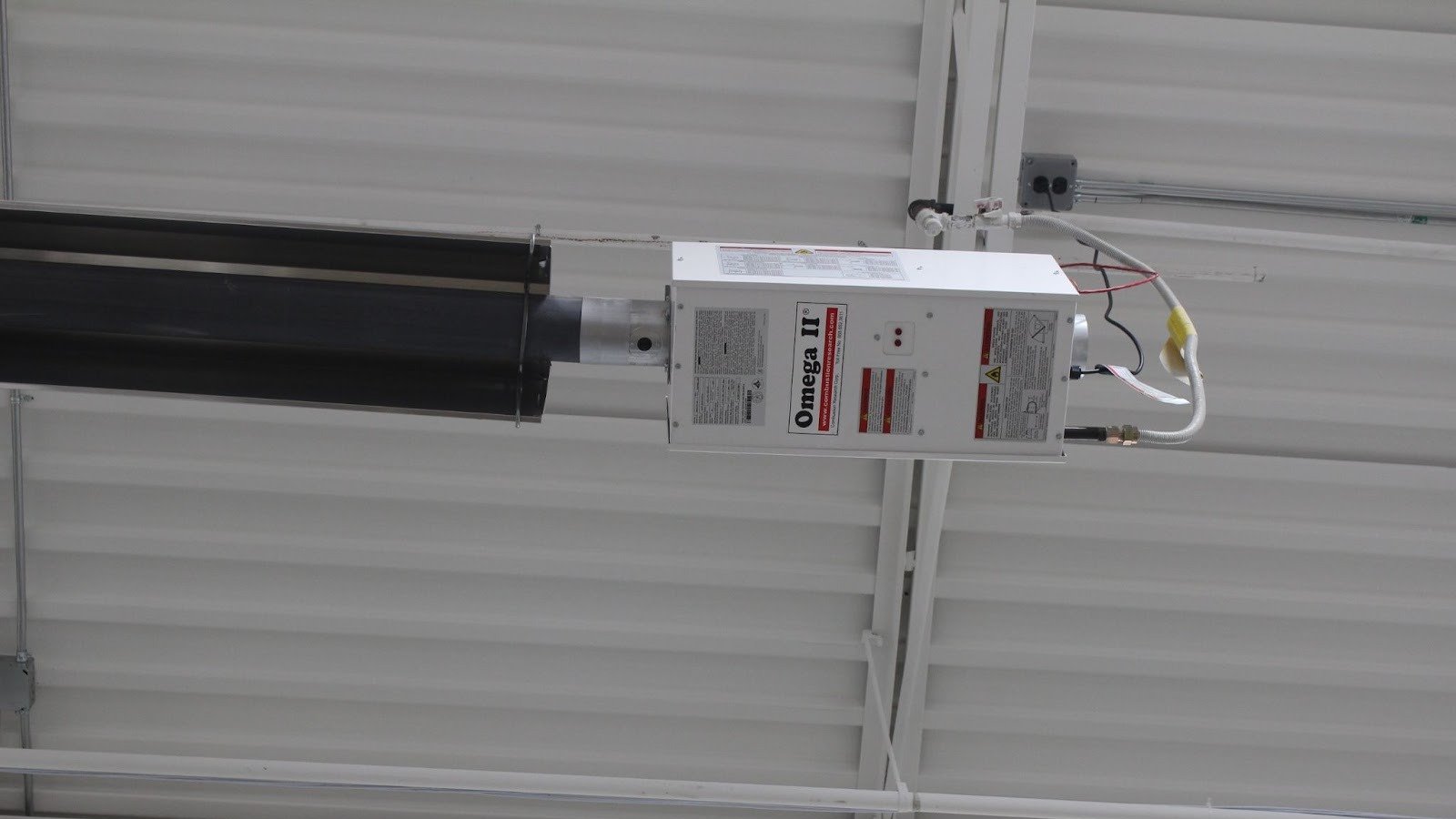
- Filter dependency: Does the burner package require an intake filter that must be cleaned or replaced on a schedule? Combustion Research Corporation states Omega II® and Reflect-O-Ray® systems are engineered so combustion air filters are not required.
- Condensation exposure: Is the system design intent to stay dry through the run under normal operating conditions? Combustion Research Corporation frames its approach as “optimum efficiency,” cautioning that chasing “maximum efficiency” can invite condensate-related tube damage.

Why “Dry Tube” Thinking Connects Directly to Lifecycle Value
Condensation inside combustion systems is not just a performance issue; it’s a corrosion issue. In greenhouse duty cycles (where setbacks, venting events, and variable loads are common) tube durability depends on matching the design to operating reality.
Strategic Product Selection: Matching the Greenhouse Heater to the Site
The table below maps common greenhouse scenarios to Combustion Research Corporation product families, so engineers and architects can align microclimate goals with venting approach, fuel constraints, and lifecycle expectations.
| System | Best Use Case | Key Specification |
|---|---|---|
| Omega II® 9K Series | High-production commercial bays with repetitive zones | 10-year warranty on radiant tubes for internally created corrosion; “Emitter Tubing … designed for optimum efficiency and output.” (https://combustionresearch.com/product/omega-ii-9k-series-0d9xxx/) |
| Reflect-O-Ray® (Gas) | Large agricultural ranges with long runs and safety emphasis | Reflect-O-Ray documentation specifies negative (vacuum) pressure burner operation. |
| Reflect-O-Ray® (Oil) | Remote/off-grid sites without natural gas | Combustion Research Corporation lists “Energy Savings of 30–50% over Conventional Heating Systems” for the oil-fired Reflect-O-Ray line (application dependent). |
The Engineer’s ROI: Cutting Hidden Costs Without Guesswork
Fuel is only one line item. The greenhouse owner also pays for instability: plant stress from swings, labor tied to avoidable shutdowns, and emergency service during cold snaps. A 2025 analysis of infrared radiant heating in greenhouses reports that cultivators have reported 30–50% decreases in fuel consumption when using infrared radiant heating systems (results vary by design and operation).
From a contractor standpoint, the “filter-free” point is equally practical: fewer routine shutdowns tied to clogged consumables can mean fewer unpaid trips and fewer frustrated grower calls. Combustion Research Corporation also positions itself as a high-touch engineering partner, helping teams evaluate greenhouse geometries and heat-loss realities so the system is right the first time.
Get Combustion Research Corporation Listed as an Approved Alternative for Greenhouse Projects
If you’re designing a Greenhouse Heater layout and want support on heat-loss calculation, zoning, venting approach, and lifecycle-risk mitigation, bring Combustion Research Corporation into the spec conversation early.