

March 20, 2026
To a layperson, the meaning of infrared might be “warmth.” For an HVAC engineer or architect, it’s a specific heat-transfer pathway (thermal radiation) that can be shaped to improve comfort in large, draft-prone, particulate-heavy buildings where air-only heating fights physics. Humans continuously exchange heat with their surroundings, and radiation is a major part of that balance (commonly cited as ~60% of heat loss in typical conditions).
That’s the core reason radiant heating can feel different than forced air. If walls and floors are cold, occupants can still feel chilled even when the air temperature looks “fine,” because the body is still losing heat to colder surfaces by radiation.
The Biological Definition of Comfort: Mean Radiant Temperature Drives How People Feel
Thermal comfort is not a single-number thermostat problem. ASHRAE Standard 55 treats comfort as a combination of air temperature, radiant temperature, air speed, humidity, clothing, and metabolic rate. People don’t only respond to air; they respond to the whole thermal environment.
Why Forced Air Can Miss the Target
Forced air heats the air first, then relies on convection and mixing to transfer heat to occupants. In high-bay spaces, warm air tends to rise and stratify, which can leave the occupied zone under-served while the upper volume becomes a heat reservoir the building doesn’t need.
What Radiant Systems Change
Radiant systems increase the mean radiant temperature of the surfaces “seen” by occupants: floors, equipment, walls, workstations. When mean radiant temperature is higher, the same perceived comfort can often be achieved with a lower air temperature (because the body loses less radiant heat to its surroundings). ASHRAE 55’s focus on radiant temperature is exactly why engineers model and specify it rather than treating comfort as air temperature alone.
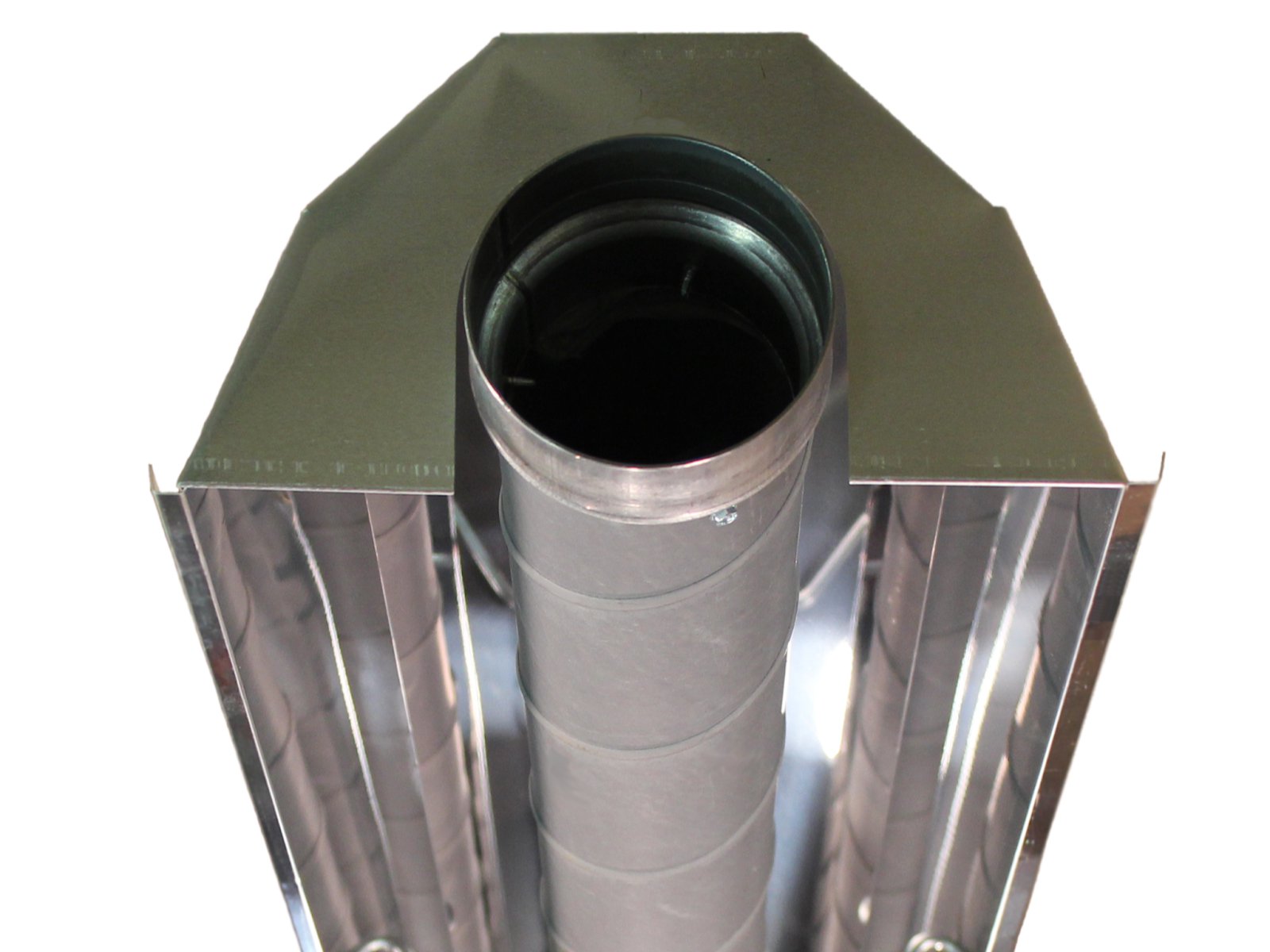
Combustion Research Corporation’s low-intensity infrared approach (Omega II® 9K and Reflect-O-Ray®) is built around applying that physics in industrial and commercial settings where comfort and uptime are linked.

Infrared’s Meaning in the Workplace: Air Movement, Dust, and Perceived Cleanliness
Forced-air systems use air as the heat-transfer medium. In facilities with dust, fibers, or process particulates, air movement can also move pollutants and allergen-carrier particles through the space and ductwork.
Radiant heat does not require high airflow for heat delivery. That doesn’t make a building “sterile,” and it doesn’t replace ventilation or filtration strategies; it can reduce the need to move large volumes of heated air just to maintain comfort. For many facilities managers, that shows up as fewer occupant complaints about drafts and “blown-around” dust in the winter heating season.
Far-Infrared Claims: Keep the Line Between Comfort and Medicine Clear
You’ll see “far-infrared” discussed in wellness contexts, and some clinical literature describes vasodilation and blood flow effects from far-infrared therapy (primarily as a controlled medical intervention).
In building heating, the practical takeaway is simpler and more defensible: radiant warmth can feel more comfortable for workers who transition between cold and warm zones (loading docks, receiving, maintenance bays) because it reduces radiant heat loss to cold surroundings and can reduce draft sensation compared with high-air-speed heating.
Any claims about reduced sick days or medical outcomes should be treated cautiously and separated from HVAC performance discussions unless you’re citing jobsite-specific studies.
The Psychology of “Sun-Like” Warmth: Why Radiant Feels Immediate
Part of infrared’s meaning is psychological because it maps to a familiar human experience: sunlight warming surfaces even when the air is cool. Radiant heat is often felt quickly because the body and nearby surfaces receive energy directly rather than waiting for the entire air volume to change temperature.
In large facilities, this can be valuable for areas with intermittent occupancy (dock doors, staging zones, service aisles). Instead of overheating the whole building to protect the coldest corner, engineers can zone radiant coverage where people and processes actually are.
Engineering Longevity: Maintenance Choices Affect “Building Health”
Facilities teams don’t just want comfort; they want systems that stay out of the maintenance log. Combustion Research Corporation positions its design philosophy around two common failure drivers in harsh environments: filter-driven service cycles and condensation-related tube damage. Combustion Research Corporation states that Omega II® and Reflect-O-Ray® systems do not require combustion air filters, avoiding a consumable that can clog and create shutdowns when maintenance slips.

Combustion Research Corporation also frames “optimum efficiency” as a durability strategy: avoid operating conditions that create internal condensation that can damage radiant tubing over time. That’s a lifecycle decision, not a marketing headline.
Before the table below, here’s the simple reason it matters: the healthiest HVAC plan for a facility is often the one with fewer recurring interventions at height and fewer hidden dependencies that turn into emergency calls.
| Benefit Category | Radiant Infrared (Combustion Research Corporation) | Forced Air / Convection |
|---|---|---|
| Air movement | Lower dependence on moving heated air for comfort delivery | Uses air as the primary heat-transfer medium |
| Comfort drivers | Strong influence on mean radiant temperature (surface warmth) | Air temperature dominates; cold surfaces can still feel “chilly” |
| Stratification sensitivity | Less dependent on heating upper air volume first | High-bay spaces can trap warm air overhead |
| Maintenance triggers | Combustion Research Corporation states filters not required; “optimum efficiency” framing to reduce condensation risk | Filters/ductwork and airflow-dependent performance add maintenance touchpoints |
Why Combustion Research Corporation for Human-Centric Design
Combustion Research Corporation is a family-owned U.S. manufacturer (since 1965) with an engineering-first approach aimed at long service life and reduced maintenance dependencies. Our systems are useful when engineers and architects want comfort outcomes that hold up in the real operating environment.
If your next project is a warehouse, hangar, manufacturing floor, greenhouse, or agricultural facility, “infrared meaning” is not a buzzword. It’s the practical intersection of building physics and human physiology, and it can be specified.
Get Engineering Help Applying Infrared Correctly
If you want Combustion Research Corporation reviewed as an approved alternate, or you want help matching radiant zoning, mounting heights, and lifecycle requirements to your space, talk with our representatives here.