

March 11, 2026
When a large competitor dominates search results, it becomes the default spec even if the equipment design assumes recurring service work. For HVAC engineers and architects, the long-term pain shows up later: more callbacks, more downtime risk, and more parts that need attention in dusty, high-activity buildings.
Combustion Research Corporation is a family-owned U.S. manufacturer (since 1952) that positions durability and low maintenance as a design choice, not a service program. The goal isn’t a brochure number; it’s equipment that stays stable in real facilities when it’s correctly selected and installed.
Radiant Tube Heater Performance: The Physics That Changes Comfort
A forced-air system heats air first, and air is the easiest thing to lose. In high-bay industrial and agricultural buildings, warm air rises, stratifies at the ceiling, and gets dumped every time doors cycle or ventilation ramps up. The stack effect makes that worse by driving warm air upward and pulling colder air in at lower levels.
A radiant tube heater shifts the mechanism: it transfers energy by radiation to people, floors, and equipment surfaces. That matters because mean radiant temperature can support comfort at a lower air temperature than a purely convective approach, which is one reason infrared heating is used in large-volume spaces and spot-heating layouts.

For a project-specific comparison between traditional forced air and radiant performance, use our Heat Loss Calculator.
Controls and Zoning: Turning Radiant Tube Heater Design Into Predictable Comfort
A radiant tube heater system performs best when the control strategy matches how the building is actually used: door cycles, shift changes, and “always-cold” perimeter zones. Instead of trying to keep an entire air volume at one uniform setpoint, engineers can zone radiant coverage around occupied work areas, staging lanes, and dock positions so heat is delivered where people and processes live.
For specs and submittals, put the control intent in writing so it survives value engineering. Call out zone thermostats by area (or bay), define warm-up/setback logic that fits the operational schedule, and include interlocks where they reduce waste (for example: dock-door contacts or ventilation status influencing zone call).
This is also where Combustion Research Corporation’s Optimum Efficiency framing becomes practical: right-sized zoning and sensible control sequences reduce cycling stress and keep the system operating in a stable range that supports long-life performance.
Where Engineers See the Difference in the Field
When you’re heating a loading dock line, a maintenance bay, or pick/pack aisles, air-temperature uniformity is rarely the real goal. The practical goal is comfort and uptime in the occupied zone, even when infiltration and door cycles are constant.
Optimum Efficiency vs. Maximum Efficiency: Why Dry Matters
“Maximum efficiency” marketing often pushes designs toward lower flue-gas temperatures where condensation becomes likely. The problem is that condensate can be acidic, and low-temperature (dew-point) corrosion is a known failure driver in combustion equipment if materials and design details don’t match the operating reality.
Combustion Research Corporation’s framing is better described as optimum efficiency: selecting and operating the system so it meets the load while reducing conditions that invite corrosive condensation inside critical sections (with correct application fit, venting, and commissioning still being non-negotiable). That design intent supports long service life rather than chasing the last brochure point.
Maintenance-Minimizing Design: What to Look for in a Radiant Tube Heater
“Maintenance-free” is a practical shorthand, but engineers still want to know what design choices reduce service burden. Use this checklist when comparing submittals:
- Combustion and tube design intent that supports dry internal operation (application-appropriate and installed per the manual)
- Longer tube corrosion coverage that matches the project’s lifecycle expectations
- Tube construction details (materials, gauge, and joinery method) that align with duty cycle and environment
- Venting approach and safety proving consistent with the building and code requirements
Spotlight: Combustion Research Corporation Series Engineers Specify for Longevity
Combustion Research Corporation’s product lines map cleanly to common spec scenarios:
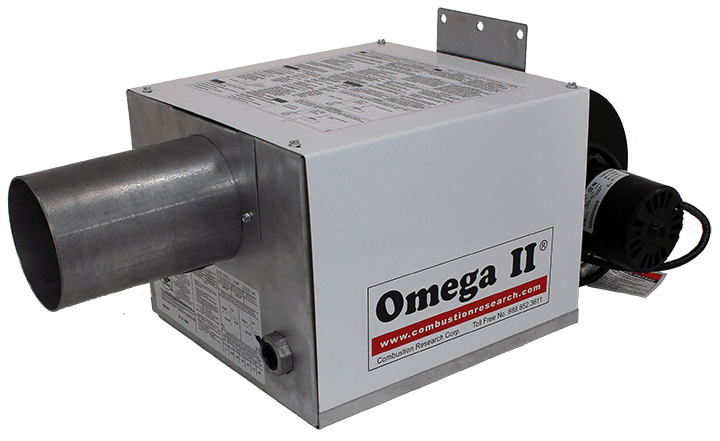
- Omega II® 9K Series: Built for commercial/industrial reliability, with published warranty language that includes 10-year coverage on radiant tubes against internally created corrosion (details governed by the warranty statement and installation/maintenance requirements).
- Reflect-O-Ray® Gas-Fired Systems: Documented as vacuum/negative-pressure burner operation in Combustion Research Corporation submittal language, which is often used for large building layouts where consistent proving and controlled combustion/venting are central to the design.
- Reflect-O-Ray® Oil-Fired Systems: A practical path for facilities that rely on #2 fuel oil for logistics or site constraints while still using infrared fundamentals for occupied-zone comfort.

Warranty Snapshot: A Spec-Ready Differentiator
The table below shows how tube warranty duration can separate “short-cycle replacement risk” from “long-cycle asset thinking,” which is exactly what owners and facilities teams care about.
| Submittal Item | Combustion Research Corporation Omega II 9K Series | Common Market Reference (Examples) |
|---|---|---|
| Radiant tube corrosion coverage | 10 years (internally created corrosion) | 5 years on tubes is common in published warranties/spec sheets |
If you’re writing an “approved alternate” request, warranty language is one of the cleanest, least-arguable spec inclusions because it’s explicit, comparable, and directly tied to lifecycle risk.
Bring Combustion Research Corporation in Early on the Spec
Engineers are also specifying responsiveness during submittals, layout questions, and field constraints. Combustion Research Corporation’s size is part of the value: large enough for complex projects, small enough for hands-on involvement when the job needs it.
If your next project needs infrared comfort without a design that assumes constant cleanup and component babysitting, write the narrative around optimum efficiency: right-sized heat delivery, realistic operating conditions, and durability that holds up in the building you actually have.
And if you want Combustion Research Corporation listed as an approved alternate, or you want help selecting the right radiant tube heater layout for your building and duty cycle, connect with our team.