

April 13, 2026
Heating a garage is more complex than most people anticipate. A private workshop, a fleet maintenance bay, and an agricultural storage building each carry distinct thermal demands. Choosing the correct fuel type is one of the first decisions to make. It directly shapes operating costs, installation requirements, and long-term performance. Understanding how each fuel source works with an infrared heater for garage applications is essential for getting the specification right. This knowledge helps engineers, architects, and facility managers make a well-informed decision early in the planning process.
Why Fuel Type Matters in Garage Heating
Not every garage has the same energy infrastructure. A residential garage in the suburbs likely has natural gas access. A rural farm facility may rely on propane tanks. An urban repair shop could run entirely on electric service. Fuel availability is the starting point for any heating project.
Beyond access, cost per BTU, supply reliability, and combustion efficiency all carry weight. The wrong fuel choice can result in higher utility bills and inadequate heating performance. For high-use commercial or industrial spaces, these costs accumulate quickly. Understanding infrared heating system design principles early helps prevent costly missteps during specification.
Installation expenses also vary by fuel type. Running a new gas line, adding a propane tank, or upgrading electrical service each carries a different price tag. These upfront costs should factor into the total cost of ownership.
Natural Gas Infrared Heater for Garage Applications
Natural gas is the most widely used fuel for commercial and industrial garage heating. It is readily accessible in urban and suburban areas. A municipal gas line connection ensures an uninterrupted supply without on-site storage requirements.

Natural gas infrared heaters convert a high percentage of fuel into radiant heat. That heat warms objects and occupants directly, rather than conditioning the surrounding air. This method is especially effective in spaces with tall ceilings or frequent door openings. Heated air escapes quickly under those conditions, but radiant warmth transfers to surfaces regardless of air movement.
Natural gas also tends to offer more price stability than liquid fuels. This predictability makes budget planning more straightforward for facility managers and building owners. It pairs particularly well with low-intensity radiant tube heater systems, which distribute warmth evenly across large floor areas.
Propane: A Viable Fuel for Remote Locations
Propane is the preferred option when natural gas lines are not reachable. Agricultural facilities, rural workshops, and off-grid commercial buildings commonly depend on it. Propane delivers a high BTU output per unit volume. This makes it a strong candidate for cold-climate applications where heating demand is intense.
The primary consideration with propane is storage and logistics. Tanks require dedicated space, and scheduled refueling is essential to avoid service interruptions. Operating costs can fluctuate with market prices, adding variability to annual budgets.

Despite those factors, propane infrared heaters deliver results comparable to natural gas units. Many heater models come in dual-fuel configurations. This allows a facility to switch between the two depending on pricing or availability conditions.
Choosing the Right Infrared Heater for Garage Efficiency
Fuel selection alone does not determine overall system efficiency. Heater design, placement, and venting method all contribute to total heat delivery. Here are key factors to evaluate when specifying a system:
- BTU capacity: Match the heater's output to the garage's square footage and insulation level.
- Venting configuration: Vacuum-vented systems draw combustion air and exhaust through sealed tubes, protecting indoor air quality.
- Radiant efficiency rating: Higher ratings mean more heat reaches occupants and surfaces, reducing fuel consumption.
- Mounting height: Low-intensity tube heaters perform well in high-bay environments, while ceramic high-intensity units suit lower-ceiling spaces.
Facilities servicing compressed natural gas vehicles require extra attention to ventilation and combustion safety. Low-intensity tube heaters are frequently specified for these environments because they operate at lower surface temperatures. Contractors and engineers working on those specialized projects can review heating solutions for CNG repair facilities and industrial buildings to clarify compatibility requirements.
Combustion Research: Engineered for Your Fuel Type and Facility
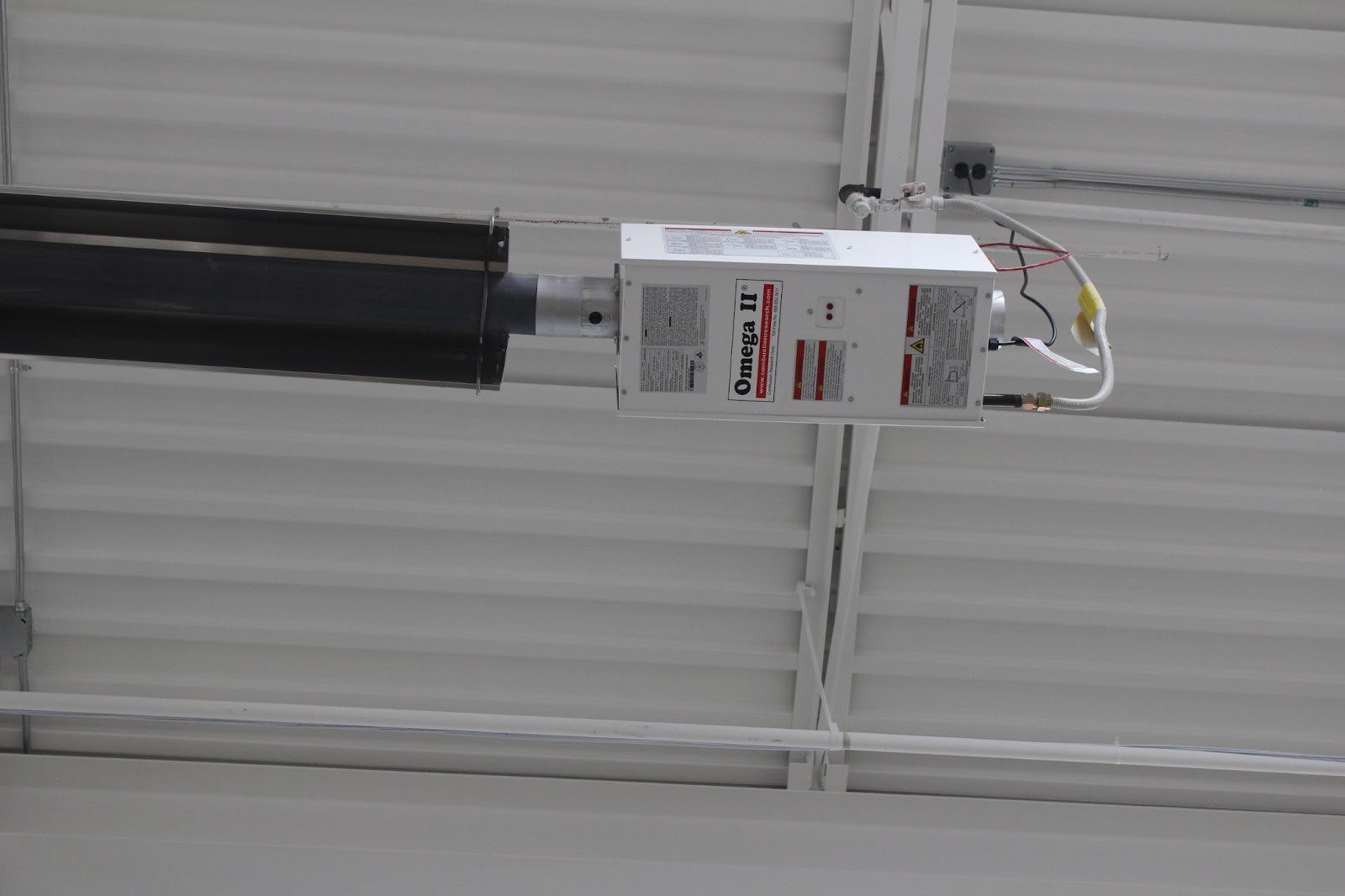
Combustion Research Corporation has manufactured low-intensity infrared heating systems for over 50 years. Their product line covers both natural gas and propane configurations. The Reflect-O-Ray® and Omega II® systems use vacuum-vented and power-vented technology. This approach maintains indoor air quality while maximizing heat delivery across a wide range of facility types.
From single-car residential garages to large fleet maintenance centers, these systems handle varying fuel sources and structural conditions. For projects with unique constraints, Combustion Research offers custom-engineered solutions. Their technical team collaborates directly with HVAC engineers, architects, and contractors to develop precise specifications. Each project receives the same attentive, detail-focused treatment, regardless of scale or complexity.
Ready to find the right fuel-matched heating solution for your space? Talk to the Combustion Research team to start the specification process.