

April 29, 2026
Misconceptions about radiant heating technology have persisted for decades. Many facility managers, engineers, and contractors hesitate to specify infrared systems because of outdated assumptions about risk. The truth is that infrared heater safety has advanced significantly. Today, engineers design modern systems to some of the most rigorous HVAC industry standards, relying on decades of real-world performance data from industrial, commercial, and agricultural applications. This article addresses the most common myths head-on, so decision-makers can evaluate infrared heating with accurate information.
Myth 1: Infrared Heaters Are a Fire Hazard
This is one of the most widespread misconceptions in industrial heating. The concern typically stems from confusion between high-temperature open-flame systems and modern low-intensity infrared tube heaters. These are fundamentally different technologies.
Low-intensity infrared systems operate at surface temperatures far below those of traditional forced-air furnaces or open-element heaters. The system's design encloses and vents the radiant tubes, ensuring they do not expose combustion gases to the occupied space. Furthermore, ANSI Z83.20 and CSA 2.34 standards clearly define clearance requirements, governing proper installation distances from combustible materials.
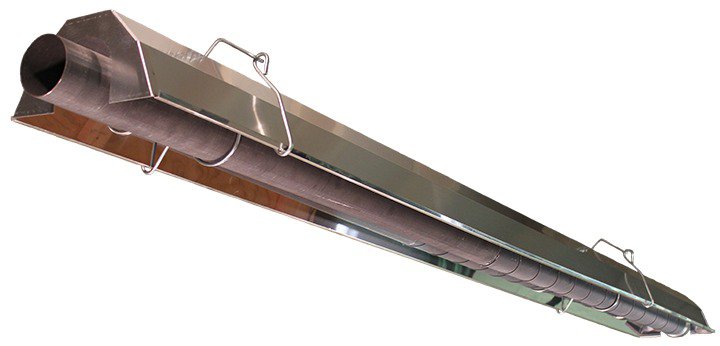
When installed correctly, low-intensity infrared heaters present no greater fire risk than a properly configured forced-air unit. In many environments, they present fewer ignition risks due to their enclosed combustion architecture.
Myth 2: Infrared Radiation Is Harmful to Workers
"Radiation" is a word that triggers unnecessary alarm. All heat transfer involves radiation. The sun warms you through infrared radiation every day.
Low-intensity infrared heaters emit long-wave infrared energy, which warms surfaces and people directly without heating the surrounding air first. This is the same principle as sunlight warming a concrete floor on a cold day. It does not involve ultraviolet radiation, ionizing radiation, or any electromagnetic energy linked to health hazards.
Both the Illuminating Engineering Society and ASHRAE recognize infrared heating as a safe and effective method for occupied spaces. Workers in warehouses, aircraft hangars, and manufacturing facilities regularly benefit from radiant comfort without adverse health effects.
The Reality of Infrared Heater Safety Standards
Regulatory requirements for infrared heating are comprehensive and well-established. In the United States, gas-fired infrared heaters must comply with:
- ANSI Z83.20 / CSA 2.34 for gas-fired unitary heaters
- NFPA 54 (National Fuel Gas Code) for gas supply and installation
- Local building codes and mechanical codes for clearances and venting
These standards govern everything from burner engineering to flue gas venting to ignition system reliability. Manufacturers must test and certify products before they reach the market. A certified unit operates within a clearly defined and regulated safety envelope when installers follow the manufacturer's specifications.

Engineers and architects specifying low-intensity infrared tube heating systems can rely on this regulatory framework. It removes guesswork from the process and gives project teams a solid foundation for compliance documentation.
How Modern Infrared Heater Safety Is Engineered
Today's low-intensity infrared systems incorporate multiple layers of built-in protection. These are not afterthoughts. They are core to the product's construction.
Modern units typically include:
- Negative-pressure vacuum or power-vented combustion, keeping exhaust gases contained and removed from the building
- Redundant ignition and flame-sensing controls that shut the unit down if combustion is not confirmed
- High-limit thermal cutoffs that respond to abnormal temperature conditions
- Sealed heat exchangers that prevent combustion byproducts from reaching occupied areas
These features collectively ensure that a properly installed infrared system operates safely throughout its service life. Draft concerns, flue gas spillage, and ignition failures are addressed at the product level, not left to chance. The result is a vacuum-vented radiant heating solution that performs dependably, year after year, with minimal upkeep demands.
Specify With Confidence: Combustion Research Systems
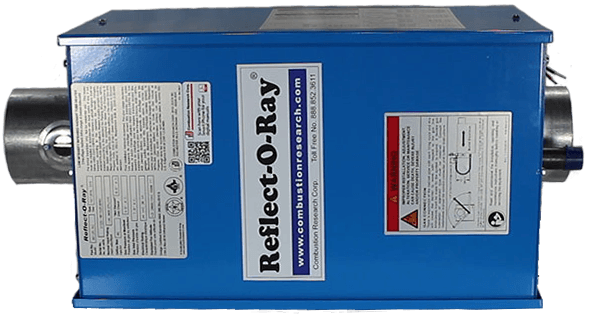
Combustion Research Corporation has manufactured low-intensity infrared tube heaters for over 50 years. Their product lines, including the Reflect-O-Ray® and Omega II®, are built around vacuum-vented and power-vented configurations that prioritize occupant safety and long-term durability. Crucially, their systems are structured to avoid built-in maintenance requirements like filters and tube failures caused by condensation.
For HVAC engineers and architects evaluating industrial infrared heating applications, Combustion Research offers full engineering support, submittal-ready product specifications, and system layout assistance tailored to your facility's requirements.
If your next project calls for a proven, code-compliant radiant heating solution, connect with the Combustion Research team. Request specifications or talk through your project with their engineering specialists today.