

May 6, 2026
High-bay industrial facilities are notoriously difficult to heat efficiently. Spaces with ceiling heights of 20 feet or more defeat conventional forced-air systems. Warm air rises, drafts scatter thermal output, and energy consumption increases without a proportional comfort benefit. Radiant heating solves this problem differently. A high-intensity infrared heater emits radiant energy that warms objects and occupants at floor level directly, bypassing the air column entirely.
Specifying the correct system for these environments requires careful attention to thermal output, mounting geometry, safety clearances, and applicable codes. Getting these details right early in the design phase prevents costly field revisions later.
Why a High-Intensity Infrared Heater Suits High-Bay Environments
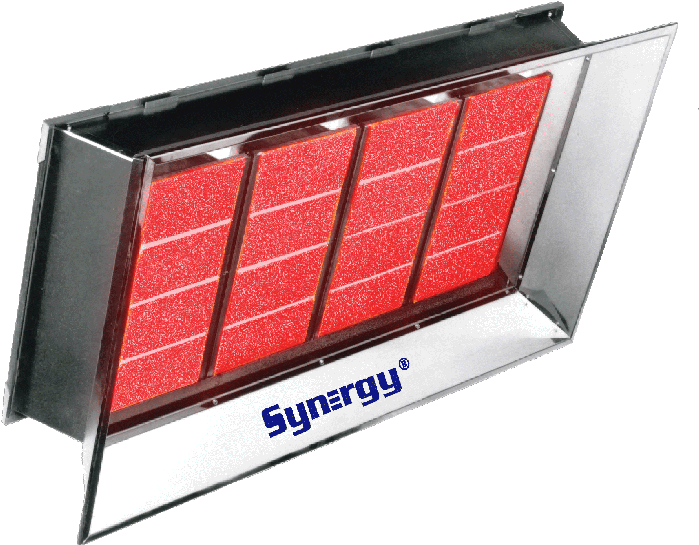
High-intensity ceramic infrared heaters operate at elevated surface temperatures. This allows them to project radiant energy effectively from mounting heights of 15 feet or more. The heat reaches the occupied zone without significant loss to the surrounding air volume.
This differs from low-intensity tube heaters, which operate at lower surface temperatures across a longer emitter length. High-intensity units are more compact, and you can direct them with precision. This makes them well-suited for spot heating, loading docks, wide open production floors, and facilities with persistent air infiltration.
Key Performance Parameters for Specifying High-Intensity Infrared Heaters
Engineers selecting or specifying these systems should evaluate the following technical criteria:
- BTU output and coverage area: Higher ceiling heights require greater output per unit. Heater spacing should ensure overlapping radiant patterns for uniform floor-level distribution.
- Emitter type and surface temperature: Ceramic emitters provide high radiant efficiency and resist degradation in rigorous industrial conditions.
- Venting requirements: Many high-intensity units are unvented. Review local codes and ventilation standards before finalizing specifications.
- Gas supply pressure and manifold sizing: Undersized gas infrastructure leads to performance issues. Confirm supply pressure matches manufacturer requirements.
Consulting with a qualified industrial infrared heating specialist during schematic design reduces the risk of specification errors.
Safety Clearances and Code Compliance in Industrial Settings
Clearance to combustibles is a critical factor with high-intensity systems. These units produce substantial radiant output. Observe both horizontal and vertical clearances throughout the mounting layout.
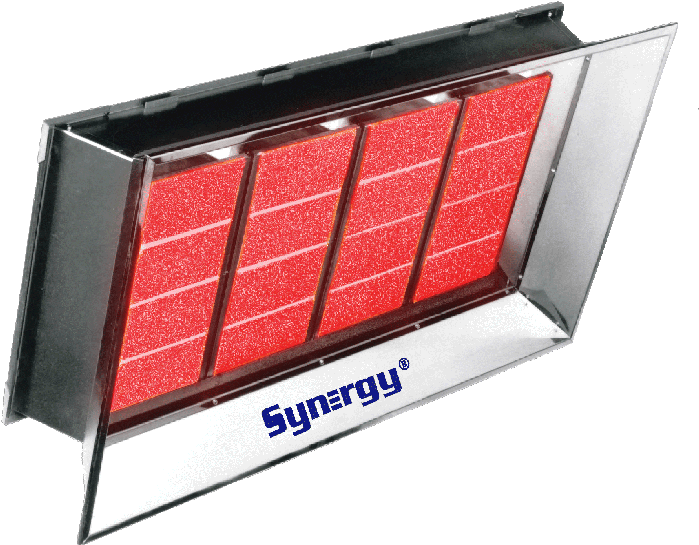
NFPA 54 (National Fuel Gas Code) and local mechanical codes set the baseline for installation. Manufacturer specifications may impose additional clearance thresholds beyond code minimums. Engineers should confirm that both sets of criteria are satisfied.
Facilities with flammable vapors, chemical storage, or spray operations require an occupancy review before any gas-fired heater is specified. Infrared heating is appropriate for many industrial occupancies, but not all.
Zoned thermostatic controls improve both efficiency and operational flexibility. Independent zones allow heating to activate only where occupancy demands it. This simplifies maintenance and reduces unnecessary runtime across large floor areas.
Energy Performance and System Layout
Research from ASHRAE and the Gas Technology Institute indicates that radiant heating systems can reduce energy consumption by 20 to 50 percent compared to forced-air alternatives in comparable high-bay facilities. These figures depend heavily on thoughtful system layout.
Uniform radiant distribution eliminates cold zones and prevents overloading individual units. Overlapping coverage patterns from multiple heaters maintain consistent floor-level temperatures. Engineers should model heat distribution using manufacturer-provided design tools or thermal analysis software.
Building envelope conditions also influence system sizing. Facilities with frequent overhead door openings or elevated air infiltration benefit from the localized nature of radiant output. Heat is delivered to the occupied zone rather than lost to uncontrolled air movement.
A well-designed ceramic infrared heating layout accounts for these variables from the outset, reducing operational inefficiency across the system's service life.
Specifying a High-Intensity Infrared Heater with Combustion Research
Combustion Research Corporation has designed and manufactured infrared heating systems for over 50 years. Their high-intensity ceramic product line is built for demanding industrial, commercial, and agricultural environments. Notably, their systems do not incorporate required maintenance items like filters or condensation-prone tube configurations, which reduces long-term upkeep burdens for facility managers.
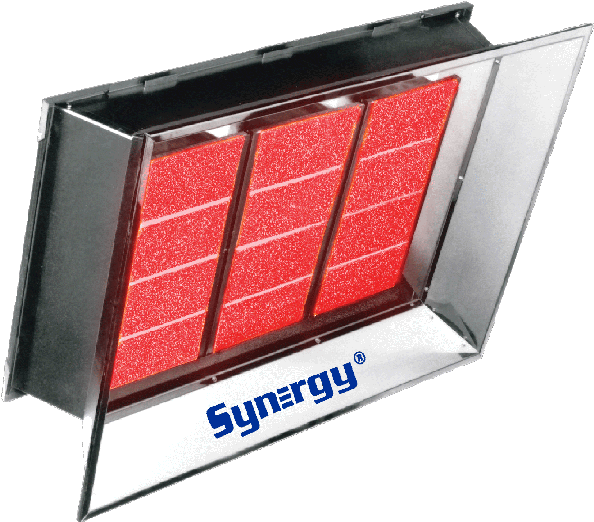
The Serengeti-IR™ ceramic infrared heating system is engineered for high-bay performance, with durable construction and straightforward serviceability. For HVAC engineers and architects seeking technical data for specification or approval as an alternate manufacturer, Combustion Research provides detailed documentation and direct engineering support throughout the design process.
Get Your Specification Right the First Time
Specifying infrared heating for high-bay industrial facilities is a precise technical process. Accurate inputs lead to better outcomes for occupant comfort, energy performance, and code compliance. Contact the Combustion Research team to request product specifications, layout assistance, or qualification as an approved alternate on your next industrial or commercial project.