

July 3, 2026
Large manufacturing plants face a heating challenge that whole-building systems handle poorly. Floor space runs into the hundreds of thousands of square feet. Ceilings climb 20, 30, or 40 feet. Workers occupy specific stations, not the entire footprint. Heating every cubic foot of that volume to a uniform temperature burns fuel to warm a space where no one works. Spot heating, however, solves that problem directly. Radiant infrared spot heating delivers warmth to the zones and workers that need it, without conditioning the full volume of the building.
What Spot Heating Actually Means in a Large Plant
Spot heating uses targeted radiant units to warm specific work areas rather than an entire facility. In other words, the goal is thermal comfort at the workstation, not uniform ambient temperature throughout the building.
This distinction matters in large plants for two reasons. First, workers in stationary positions feel cold faster than workers in motion. Assembly line operators, quality control technicians, and machine operators who stay in one place need consistent warmth at their specific location. Second, large plants often mix heated and unheated zones. Loading areas, staging zones, and equipment corridors do not need the same temperature as occupied workstations. Therefore, spot heating lets facility managers heat what matters and leave the rest alone.
Radiant infrared delivers spot heating more effectively than forced air. Specifically, infrared energy travels directly from the source to the surface or person it contacts. It does not depend on air circulation to reach its target. Consequently, a well-positioned radiant unit warms a workstation without losing energy to the surrounding volume.
The Energy Case for Spot Heating
Heating an entire large plant to comfort temperature is expensive. The DOE estimates that industrial facilities account for roughly a third of all US energy use, and space heating carries a significant share of that load. Strategies that reduce the heated volume, or improve thermal delivery efficiency, can cut that cost substantially.
Spot heating with radiant infrared does both. By targeting occupied zones, facility managers reduce the effective heated volume. Furthermore, by using radiant delivery rather than forced air, they avoid stratification losses that send heat to the ceiling rather than the occupants. CRC's low-intensity radiant tube systems deliver fuel savings of 30 to 50 percent compared to conventional forced-air systems. In spot heating configurations, those savings concentrate further because the system only conditions the zones that need it.
Additionally, spot heating integrates naturally with existing building infrastructure. CRC units mount overhead and direct heat downward via parabolic reflectors. They do not require ductwork, floor space, or changes to the building envelope. As a result, facilities can add or reposition spot heating zones as production layouts change without major capital investment.
Worker Comfort and Productivity in Spot-Heated Facilities
Thermal comfort at the workstation is not just a comfort issue. It affects productivity, accuracy, and error rates. Cold workers move more slowly, lose fine motor control, and fatigue faster. In precision manufacturing, those effects show up directly in defect rates and output quality.
ASHRAE Standard 55 establishes thermal comfort criteria for occupied spaces and identifies mean radiant temperature as a primary variable in occupant comfort. Radiant spot heating raises the mean radiant temperature at the workstation directly. As a result, workers reach thermal comfort at lower ambient air temperatures than forced-air systems require. That means lower thermostat setpoints for the broader facility and less energy consumed overall.
Moreover, spot heating eliminates the air movement associated with forced-air systems. Drafts at workstations lower the perceived temperature and force workers to wear more layers. In contrast, radiant heat delivers warmth without air movement, which removes that variable entirely.
Flexibility Across Changing Plant Layouts
Manufacturing plants reorganize. Production lines shift. New equipment arrives. Old workstations move. A whole-building heating system does not adapt easily to those changes. Spot heating, however, does.
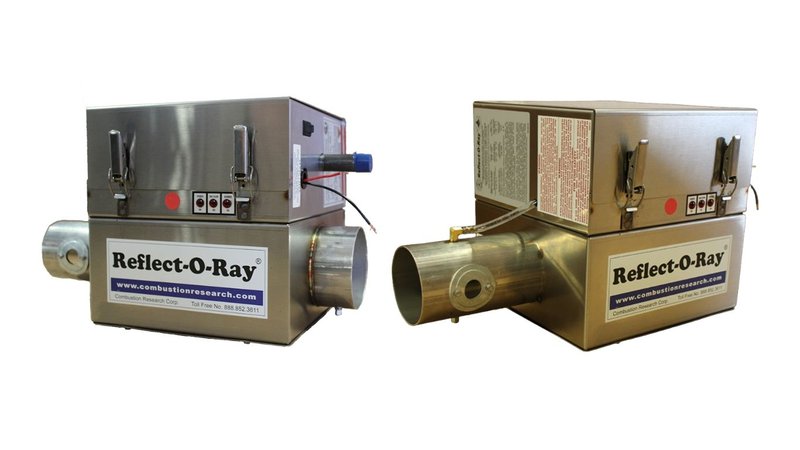
CRC's radiant tube product line includes multiple tube lengths and BTU configurations. Spot heating zones scale to a single workstation or a cluster of stations, matched to the thermal load of the specific area. When layouts change, the system reconfigures to match. That flexibility reduces the risk of overheating some zones while underheating others as the facility evolves.
For large plants running multiple shifts, spot heating also allows operators to stage heat delivery by zone and time. Active production zones run at full output. Idle zones scale back. Specifically, that kind of zone-level control is difficult to achieve with a centralized forced-air system but straightforward with independently controlled radiant units. The same zone-staging logic applies to net-zero facility designs that use radiant to reduce total heating loads.
Spot Heating as Part of a Broader Radiant Strategy
Many large plants use spot heating alongside a base radiant system that maintains a minimum background temperature. The base system handles the building envelope load. Spot heating, in turn, handles occupant comfort at specific stations. Together, they deliver better thermal performance at lower total energy cost than a single forced-air system trying to do both jobs.
To explore spot heating specifications for your facility, reach out to a regional CRC representative today.