

April 22, 2026
Large commercial and industrial spaces present unique heating challenges. Floor space is valuable. Wall areas are often occupied by equipment and shelving. Portable units rarely provide the consistent coverage that demanding environments require. That's why facility managers and HVAC professionals increasingly turn to ceiling heaters as a practical, efficient alternative.
Ceiling-mounted systems keep the floor clear and direct warmth exactly where workers and equipment need it. This approach suits a wide range of settings, from warehouses and aircraft hangars to workshops and agricultural buildings.
Why Ceiling Placement Changes the Heating Equation
Traditional forced-air systems push warm air upward. It collects near the roof and escapes before it benefits anyone near the floor. This stratification problem is particularly common in high-ceiling structures.

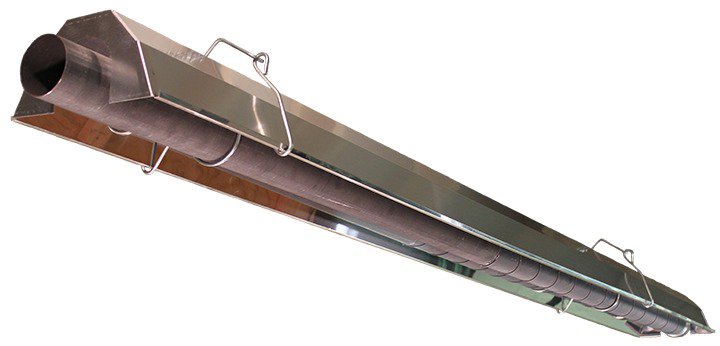
Ceiling-mounted radiant heaters work differently. Unlike convection-based units, they heat objects and people the way the sun does. Infrared radiation travels through air without warming it first, then transfers energy directly to surfaces and occupants below. Drafts and airborne dust are significantly reduced in the process.
Workers at floor level feel warmer without the thermostat cranked up. This translates to meaningful energy savings over a full heating season.
Key Applications: Where Ceiling Heaters Deliver Results
Ceiling-mounted heating solutions are not a one-size-fits-all product. Their adaptability makes them appropriate across many sectors:
- Warehouses and distribution centers: High bays require heat that reaches the floor without excessive energy loss. Radiant systems mounted overhead are well-suited for these operations.
- Agricultural buildings: Livestock barns and poultry houses benefit from even, consistent warmth that does not stir up dust or pathogens from bedding material.
- Automotive and CNG repair shops: Technicians need warmth while working. Ceiling systems keep the floor free of obstructions while meeting ventilation code requirements.
- Aircraft hangars: Wide-span facilities with tall clearances make ceiling-mounted radiant heat a logical choice. Air stratification is less of a concern compared to forced-air alternatives.
- Commercial and retail spaces: Spot heating at entry points or loading docks keeps staff comfortable without conditioning an entire zone unnecessarily.
This range of sectors highlights how adaptable ceiling-mounted systems can be for builds of all types and scopes.
Space Efficiency and Structural Considerations
One of the strongest arguments for ceiling heaters is the floor space they preserve. In industrial settings, every square foot of usable area has real operational value. Overhead units eliminate the footprint that ground-level or wall-mounted systems require. They also reduce potential safety hazards related to accidental contact with forklifts and material-handling machinery.
Ceiling height directly affects which type of system performs best. Low-intensity tube heaters work well in taller structures. High-intensity units cover shorter mounting heights more effectively. Architects and HVAC engineers must account for these variables early in the design phase. A well-planned layout ensures optimal coverage and minimizes the number of units needed.
What to Look for When Selecting Ceiling Heaters
Choosing the right system involves more than picking a BTU rating. Several technical factors influence performance and long-term reliability:
- Heating type: Low-intensity infrared tube heaters distribute warmth over longer distances. High-intensity ceramic units are better suited for targeted zone heating.
- Venting configuration: Vacuum-vented and power-vented options affect placement flexibility and positioning within a building.
- Engineering support: A manufacturer with design capabilities can model heat distribution before construction begins, reducing guesswork and costly adjustments.
These considerations matter most during the specification stage, when professionals are evaluating products for inclusion in their design documents. Engaging a knowledgeable supplier early in the planning cycle streamlines approvals. It also reduces the need for substitutions later. Getting the right system documented correctly saves time and money during construction.
Ready to Specify a Ceiling Heating System?
Combustion Research Corporation has manufactured low-intensity infrared heating solutions for over 50 years. Their product lines, including the Reflect-O-Ray® Engineered Design Systems and Omega II® Pre-Engineered Packages, are built for challenging industrial applications.

Both vacuum-vented and power-vented configurations are available. These systems are designed for durability and do not include built-in maintenance components like filters or condensation-prone tube replacements.
Combustion Research offers technical assistance throughout the specification process for new construction and retrofit projects. Their low-intensity infrared tube heaters are strong alternatives worth listing in project documents, and their team can provide the engineering documentation needed to move forward with confidence.
Talk to the Combustion Research team today to discuss your heating needs and get the specification support your next project requires.