

May 29, 2026
Loading docks are among the hardest spaces to heat consistently. A high-intensity infrared heater handles the challenge better than forced-air alternatives because it heats the floor, equipment, and workers directly rather than the air column. That distinction matters when dock doors cycle open and closed dozens of times a day, and every opening flushes heat out of the space in seconds.
Forced-air systems spend most of their operating time in recovery mode at busy docks. Workers feel the temperature drop with every door cycle, and the system never builds enough thermal reserve to buffer against the next one. Combustion Research Corporation (CRC) designs the Synergy® high-intensity ceramic infrared system specifically for these high-cycle, high-loss environments.
Why Forced Air Falls Short at the Dock
A forced-air unit heats the air to a setpoint, then cycles off. When a dock door opens, that warm air exits fast. The unit has to reheat the full air volume from scratch, and that takes time and fuel. In a distribution center where doors open every few minutes, a high-intensity infrared heater outperforms forced-air precisely because it doesn't depend on the air column to deliver warmth. CRC's recovery principles for high-bay applications cover how infrared handles heat recovery in high-loss environments in more detail.
How a High Intensity Infrared Heater Handles Door Cycles
A high-intensity infrared heater emits concentrated radiant energy that heats the objects and people it reaches directly. The dock floor absorbs that energy and holds it, acting as a thermal buffer that keeps radiating heat back into the space even after the burner cycles off.
So when a dock door opens, the floor and equipment retain their stored energy. Workers feel warmth from those surfaces rather than from the air. Recovery after a door-open event is faster because the system tops up surface temperatures rather than reheating a full air volume from ambient. That difference adds up in high-cycle dock environments. CRC's resources on thermal mass in infrared heating cover how the floor mass effect drives this recovery speed.
Selecting the Right High-Intensity Infrared Heater for Your Dock
High-intensity infrared heaters come in ceramic and electric configurations, and both have a role depending on the dock environment.
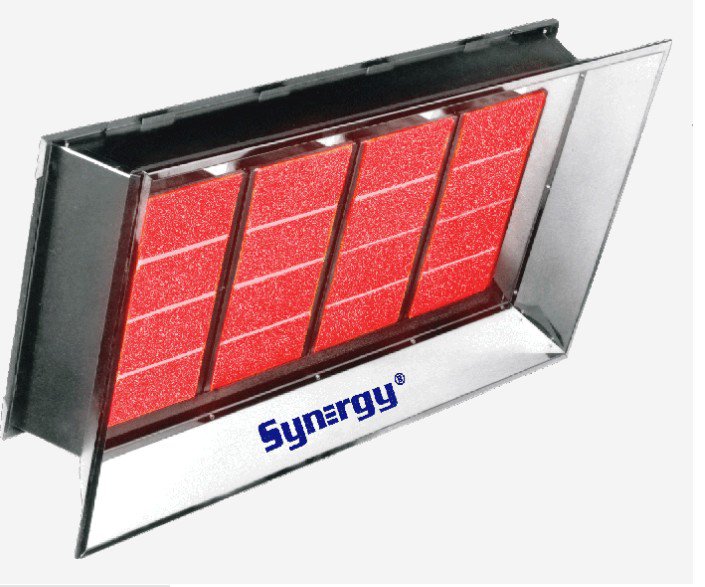
Ceramic infrared units like CRC's Synergy® deliver high radiant output from a compact overhead installation. They heat up fast, reach operating temperature quickly, and direct output precisely into the work zone below. For docks with natural gas or propane service, ceramic infrared is typically the most cost-effective high-intensity option.
Electric infrared suits docks where combustion isn't an option: food processing facilities, pharmaceutical operations, or any environment with strict indoor air quality requirements. CRC's Solaira Alpha Series delivers zero-emission radiant output with no combustion byproducts, so it works well in these environments without sacrificing performance.
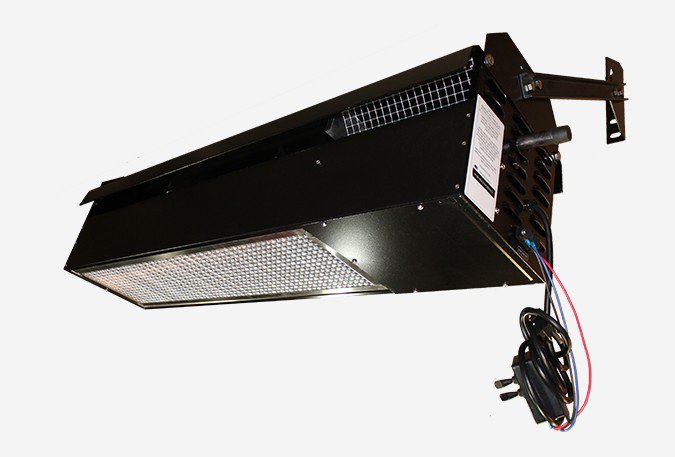
For very high ceilings, the low-intensity Reflect-O-Ray® 6.0 handles high-bay applications above 20 feet well. Its vacuum exhaust design and patented spiral tubing deliver faster heat recovery than competing high-bay systems. Federal energy research confirms that radiant systems outperform forced-air in high-loss environments because they heat objects rather than air.
Installation Considerations for Dock Environments
Loading docks present specific installation challenges. Overhead clearance is often tight, and dock levelers, vehicle bumpers, and material handling equipment all limit placement options. Confirming that a high-intensity infrared heater fits the available overhead space is a necessary first step before finalizing the system layout.
Low-intensity radiant tube heaters need specific clearance distances from combustible materials. CRC's systems carry documented clearance specs for each configuration, and those apply in dock installations just as they do elsewhere. Checking clearance compliance before finalizing the layout avoids costly repositioning after installation.
Sealed combustion units are the right call for enclosed or semi-enclosed dock areas where exhaust integrity matters. In partially open dock environments, power-vented configurations may suit the airflow dynamics better. CRC's product range covers both, and a rep can help match the right system to the dock's specific conditions.
The Productivity Case for a High-Intensity Infrared Heater at the Dock
The business case goes beyond energy savings. Cold dock environments reduce worker productivity, increase error rates, and drive turnover in roles that are already hard to fill. Workers who stay comfortable move faster, make fewer mistakes, and stay on the job longer.
A well-specified infrared dock heating system pays for itself through fuel savings, reduced maintenance costs, and improved worker performance. In a facility running multiple shifts across a busy dock, those returns compound quickly. If your dock heating is having a hard time keeping up with door cycles, contact us today! We can take a look at your specific needs and work with you in coming up with solutions.