

June 8, 2026
Most facility managers make heating system decisions based on the upfront quote, and that's where infrared radiant systems often lose the room. The HVAC installation cost for a radiant tube system typically runs higher than a forced-air unit heater, but that gap looks very different when you run the numbers over ten years.
The comparison isn't complicated, but it requires looking at the right variables. A forced-air unit heater that costs less to install can easily cost more to operate within three years. Understanding where those costs accumulate separates a well-specified system from one that looks good on a purchase order and underperforms for the next two decades.
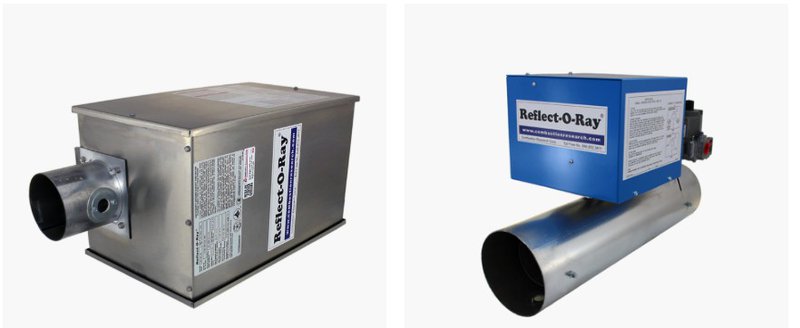
Combustion Research Corporation (CRC) designs its Reflect-O-Ray® and Omega II® systems around the principle that optimum long-term efficiency matters more than lowest upfront cost.
Breaking Down HVAC Installation Cost for Radiant vs. Forced-Air Systems
The upfront HVAC installation cost for a low-intensity radiant tube system typically runs higher than a forced-air unit heater for several reasons. Radiant tube systems need careful layout design to optimize coverage and clearance. The tube length, British Thermal Unit (BTU) input, and mounting height all need to match the facility's heat loss profile. That design work adds time and cost to the installation phase.
Forced-air systems carry hidden installation complexity, however. Ductwork, plenums, and distribution systems add cost that doesn't appear in the unit price. In large facilities, the materials and labor for duct runs can rival the cost differential between system types. For a detailed look at how installation cost components compare, cost breakdowns between radiant and forced-air systems are worth reviewing before finalizing a specification.
Where the Return on Investment (ROI) Shift Happens: Fuel Costs Over Time
The most significant factor in the ROI comparison is fuel consumption. CRC's radiant systems consistently deliver fuel savings of 30 to 50 percent compared to forced-air alternatives. In a facility with a meaningful annual heating bill, that range produces substantial savings year over year.
Consider a facility spending $40,000 annually on heating fuel. A 30 percent reduction saves $12,000 per year, recovering a $25,000 installation premium in just over two years. A 50 percent reduction saves $20,000 annually and recovers the same premium in under 18 months. Over a ten-year horizon, that HVAC installation cost premium on the radiant side typically reverses entirely. Those numbers shift by facility size and local fuel costs, but the directional case holds across applications.
Fuel savings also compound as energy costs rise over time. Forced-air systems that looked cost-competitive at installation become increasingly expensive to operate as fuel prices increase. Radiant systems start from a lower consumption baseline and hold that advantage throughout their service life. For more on the physics driving this efficiency difference, fuel savings principles at CRC explain how infrared reduces consumption compared to air-based systems.
HVAC Installation Cost vs. Lifetime Maintenance: The Variable That Shifts the Equation
Maintenance cost is the second major variable in any HVAC installation cost ROI analysis, and it's the one most often underestimated in upfront comparisons.
Forced-air systems need regular filter replacements, blower maintenance, duct cleaning, and periodic burner service. In dusty industrial environments, filter replacement intervals shorten considerably. A system requiring quarterly filter changes across multiple units adds significant annual maintenance cost that compounds across the system's life. When filters go unmaintained, effectiveness drops and total failure risk increases.

CRC's radiant systems eliminate filter requirements entirely by design. There are no blowers to service, no ductwork to clean, and no filters to replace. The ten-year radiant tube warranty also reduces the risk of major component failures during that period. That maintenance profile is substantially simpler and cheaper than forced-air alternatives over a ten-year horizon. For a closer look at how filter-free design reduces lifetime repair exposure, maintenance cost analysis across radiant and forced-air systems covers the key variables.
System Longevity and the True Cost of Replacement
The third factor in the HVAC installation cost ROI analysis is system longevity. Forced-air unit heaters typically have a service life of 15 to 20 years under normal conditions. Low-intensity radiant tube systems, when properly specified and installed, routinely outlast that range. CRC's ten-year tube warranty signals the company's confidence in its systems' durability.
A facility comparing a $30,000 radiant installation to a $20,000 forced-air installation needs to factor in a likely forced-air replacement cycle. If the forced-air system needs replacement at year 15, that replacement cost enters the comparison. The radiant system running to year 25 also carries a lower accumulated fuel and maintenance cost differential over that same period. Federal energy research notes that radiant heating systems deliver long-term energy and maintenance advantages that make them cost-competitive on a lifecycle basis.
Running the Numbers for Your Facility
The ROI case for radiant infrared heating is strongest in large facilities with high heating loads, variable occupancy, and significant door cycling. It's also strong in operations without dedicated facilities management staff, where maintenance simplicity has real operational value.
CRC's online calculators help establish accurate heat loss baselines before a specification gets finalized. That baseline is the starting point for a meaningful HVAC installation cost comparison. Without it, under-specification produces systems that run continuously without hitting target temperatures.
If your next heating project warrants a full lifecycle cost comparison before the specification closes, CRC's engineering team can work through the numbers with you.