

June 5, 2026
Small shops are among the hardest spaces to heat efficiently. High ceilings, leaky envelopes, and doors that cycle constantly create conditions where forced-air systems burn fuel without delivering reliable comfort. An infrared shop heater addresses each of those variables directly, which is why shops that make the switch consistently report fuel savings of 30 to 50 percent.
Rather than warming the air, an infrared system directs radiant energy downward onto the floor, equipment, and people in the space. The concrete slab absorbs that energy and re-radiates it steadily, even after the burner cycles off. That stored thermal mass keeps the environment stable in ways that air-based systems can't replicate.
Why Forced Air Falls Short in Shop Environments
When a bay door opens in a forced-air shop, the warm air column collapses almost immediately. Every BTU that heated that air is gone, and the system has to start over. In shops where doors cycle dozens of times a day, those losses add up fast. Restoring comfort takes time and fuel, and the cycle just keeps repeating.
Infrared sidesteps this entirely. It heats surfaces and objects rather than the air column, so a door-open event doesn't reset the thermal environment. The floor and equipment hold their stored heat and keep warming the space from below. That resilience is well documented at the federal level.
What to Look for in an Infrared Shop Heater
Not every infrared shop heater is built the same way. Before specifying a system, these four criteria are worth examining closely.
- Tube length and BTU ratio. A well-engineered low-intensity radiant tube heater spreads BTU input across the full length of the radiant tube. Systems that use short tubes with high BTU input cost less to produce but run less efficiently. If a system's pre-dilution exhaust temperature exceeds 450°F, that heat is leaving your building rather than warming your floor. Look for systems built around an optimum BTU-to-tube-length ratio.
- No filters required. Many infrared systems need combustion air filters to be replaced on a regular schedule. In a small shop, that falls on the owner. Filters that go unmaintained reduce effectiveness and can cause total system failure. CRC's Reflect-O-Ray® and Omega II® systems eliminate combustion air filters by design, which removes both the cost and the risk.
- Sealed combustion. This design draws combustion air from outside the building rather than from the shop interior. That matters in spaces with solvents, dust, or paint fumes. It also supports cleaner indoor air and reduces contamination risk. For more on why engineers specify sealed combustion in demanding environments, see how sealed combustion improves safety in harsh shop conditions.
- Condensate-free operation. Some systems chase maximum thermal efficiency and produce condensate as a byproduct. Condensate is corrosive and destroys radiant tubing from the inside out. CRC's optimum efficiency philosophy avoids condensate entirely, and the company backs that with a ten-year radiant tube warranty.
Getting the Size Right
Proper sizing matters as much as the system itself. An undersized heater runs constantly and still can't hit target temperatures. An oversized one short-cycles, which reduces efficiency and wears out components faster. Both outcomes cost money.
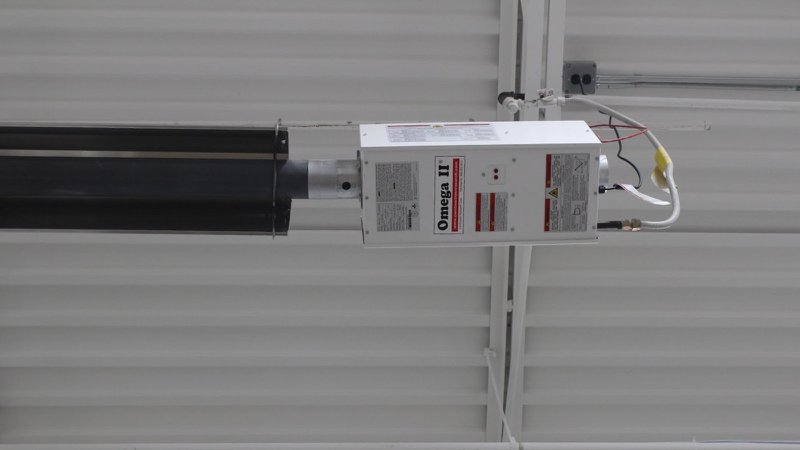
Sizing an infrared shop heater starts with a heat loss calculation that accounts for ceiling height, building envelope performance, door frequency, and local climate. For most small shops, a low-intensity vacuum-vented system like the Reflect-O-Ray® 3.5 or 4.0 handles the load well. Larger floor areas or higher ceilings may call for the 4.C or dual-input configurations. CRC's online calculators give you a solid baseline before you contact a rep. For a closer look at how tube length and BTU input shape long-term operating costs, this breakdown of lifetime cost differences between system types is a useful starting point.
The Infrared Shop Heater Advantage: Lower Bills, Less Maintenance
The operational benefits go well beyond the fuel bill. There are no filters to check, no belts or blowers to service, and no ductwork to clean. The system runs quietly, and comfort stays consistent because the floor releases heat evenly rather than cycling between hot and cold. For owners without a facilities manager on staff, that simplicity translates directly to time and money saved. For a detailed look at how filter-free design reduces repair exposure over a system's life, this analysis of commercial HVAC repair cost drivers lays out the numbers.
Gas, Propane, or Oil: Matching Fuel to the Space
Most small shops run on natural gas, and low-intensity infrared pairs well with it. Propane works where natural gas isn't available, and CRC systems support both. For agricultural shops or remote sites without any gas service, an oil-fired variant of the Reflect-O-Ray® is available. Locking in the right fuel source at the specification stage avoids costly retrofits down the road. Proper energy selection for shop and garage heating will cover the key variables.
Two Decades of Operating Costs Start With One Decision
Replacing an aging unit heater or specifying a new build shapes your energy budget for the next twenty years. Infrared systems outlast forced-air alternatives and carry a lighter maintenance burden throughout. Get in touch with the Combustion Research team to discuss sizing, fuel options, and installation requirements for your space.