

August 19, 2026
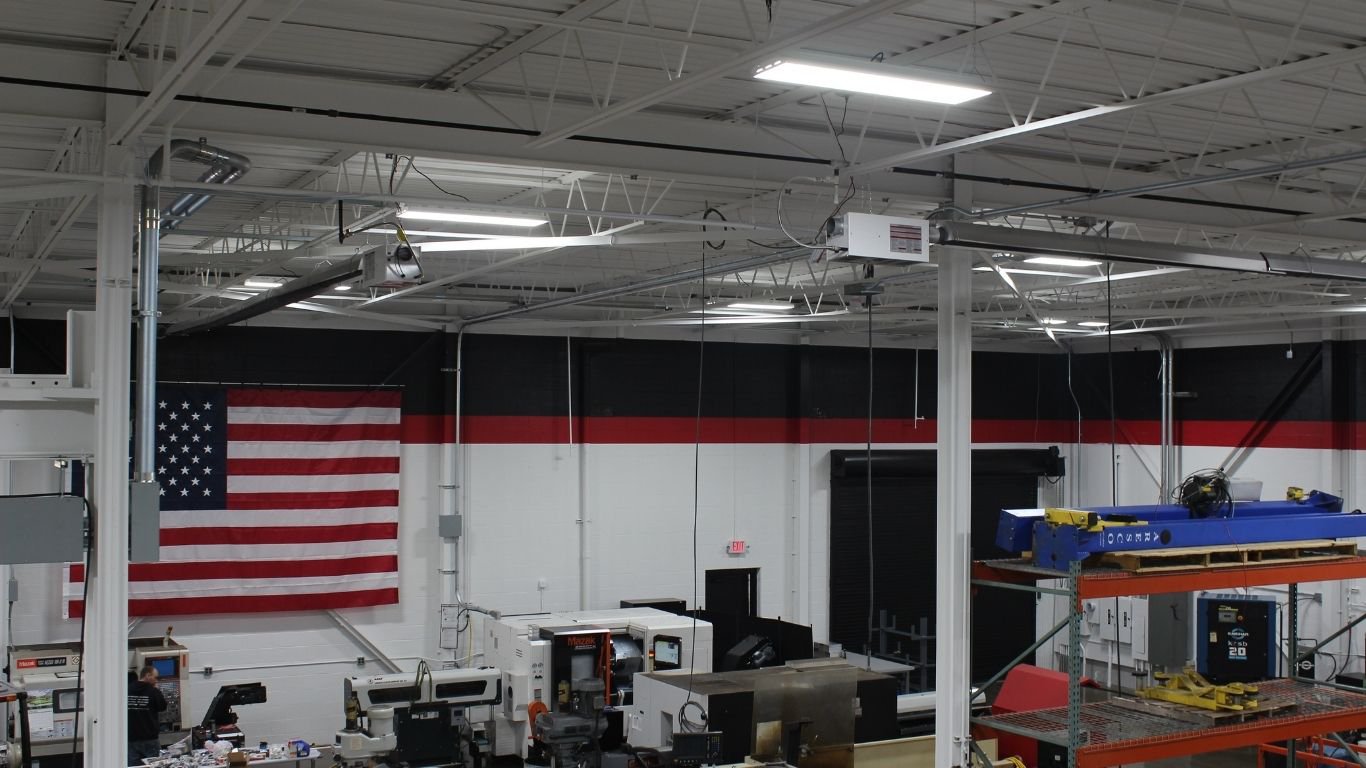
Air quality problems in industrial facilities often trace back to the heating system. When exhaust returns to the occupied area, the effects compound over a shift. Workers share oxygen with the combustion process, and byproducts that don't fully vent disperse into the working environment. Sealed combustion heaters address this at the design level, keeping combustion gases separate from the spaces people occupy.
How Sealed Combustion Heaters Work
A sealed combustion system draws its combustion air from outside the building through a dedicated supply path. Exhaust exits through a separate, sealed path, and neither stream touches the occupied environment. That separation keeps combustion from competing with occupants for oxygen and prevents byproducts from reaching the workspace.
Additionally, vacuum-vented systems take this a step further. In a negative-pressure exhaust design, the system draws exhaust out rather than pushing it through positive pressure. This reduces the risk of exhaust entering the building when loading doors open or interior pressure shifts. Combustion Research's vacuum exhaust designs follow this principle, minimizing roof penetrations while keeping combustion and occupancy physically separate.
Filter-Free Design and What It Means for Air Quality
Many commercial combustion heating systems require air filters to protect the burner from airborne particles. However, the lack of maintenance for those filters can lead to two problems in parallel. The filter restricts airflow to the burner, degrading combustion quality. As a result, debris that bypasses a failing filter enters the combustion chamber and worsens the problem. In the end, both outcomes affect what ends up in the air inside the facility.
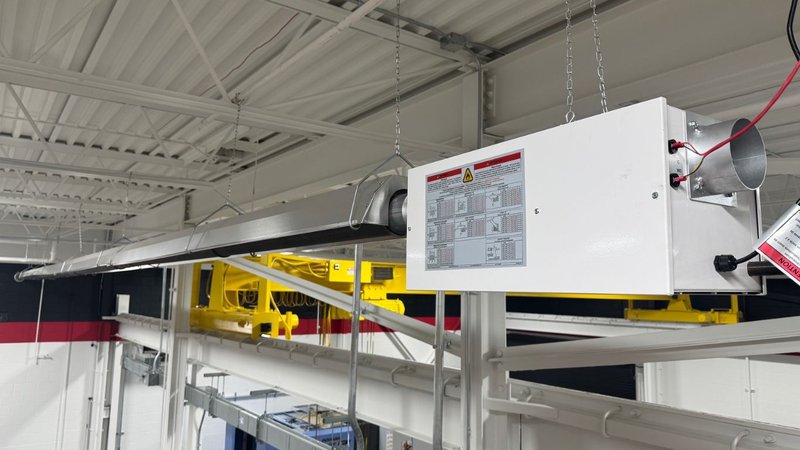
For facilities that operate under standards limiting airborne contaminants, these failures carry additional weight. ASHRAE 62.1 is the American Society of Heating, Refrigerating and Air-Conditioning Engineers' ventilation standard for commercial buildings. It treats combustion equipment as a contaminant source by design. In contrast, Combustion Research's Reflect-O-Ray® and Omega II® systems need no combustion air filters. This eliminates the filter-based failure patterns that harm indoor air quality in competing systems. Without a filter, there's no maintenance failure point and no degraded combustion from a missed service interval.
Radiant Heat and the Air You Breathe
Radiant infrared heating introduces a structural advantage for indoor air quality that extends beyond the sealed combustion system itself. Forced-air heating relies on moving large volumes of conditioned air through the facility to transfer warmth to occupants. However, this air movement carries particles, redistributes contaminants, and creates circulation patterns that fight containment in dusty or process-heavy facilities.
Instead, Combustion Research's radiant heaters direct energy downward via overhead reflectors, warming objects and floor mass rather than the surrounding air. The floor stores that energy and re-radiates it steadily at the occupant level. Because air is not the heat transfer medium, radiant systems don't agitate the particulate environment the way forced-air equipment does. Engineers evaluating indoor industrial applications consistently find radiant systems better matched to air quality demands.
Applications Where Air Quality Drives Specification
The air quality advantages of sealed combustion heaters become most critical in specific facility types. For example, greenhouses and agricultural buildings depend on controlled growing environments. Combustion byproducts that enter the growing space can stress plants. Forced-air systems add physical stress through air movement. Sealed radiant systems deliver heat without disrupting the controlled environment or introducing contaminants into the growing space.
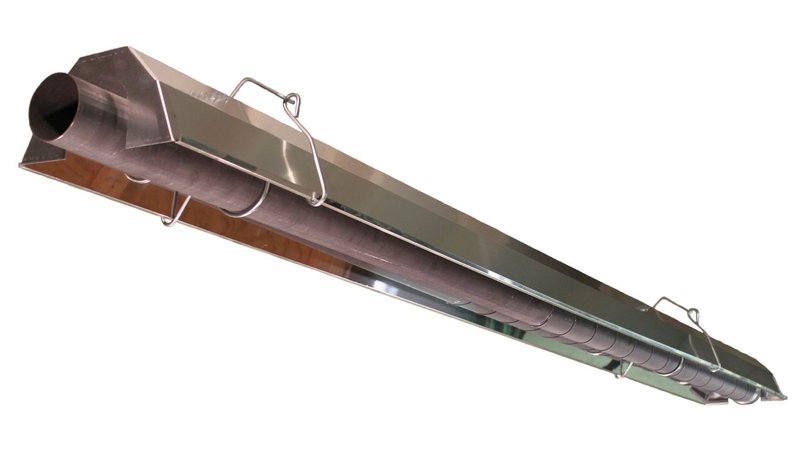
Aircraft hangars and distribution warehouses also present high-bay heating challenges that forced-air systems handle poorly. Large structures with leaky envelopes lose conditioned air rapidly whenever large doors open. Sealed radiant systems heat the floor mass directly. Concrete holds that energy and maintains temperature at the occupant level even after significant air loss.
Finally, facilities servicing compressed natural gas (CNG) and liquefied natural gas (LNG) vehicles face the most exacting requirements. NFPA 30A covers motor fuel dispensing facilities and repair garages. The National Fire Protection Association's code caps tube and surface temperature at 750°F (399°C) in specialty fuel vehicle repair buildings. Combustion Research is one of the few manufacturers with Reflect-O-Ray® units certified for this application. The company adheres to the standard rather than adapting products after the fact.
Sealed Combustion Heaters: Specifying for the Long Term
The air quality case for sealed combustion heaters stands on its own, but efficiency reinforces the specification. Facilities that replace forced-air heating with sealed radiant systems report fuel savings of 30 to 50 percent. The savings trace to the same principle behind the air quality benefit. In short, heating mass instead of moving air uses less fuel per unit of warmth. A system that protects air quality and cuts operating costs makes a strong case for demanding facilities.
For facilities with regulatory obligations or process-sensitive environments, the heating specification carries real downstream consequences. A system that demands filter maintenance or compromises combustion quality carries more operating cost than its purchase price suggests. Remediation costs on top of that rarely appear in initial bids.
Sealed radiant systems from Combustion Research eliminate those variables by design. Combustion Research tests every unit before shipment, not as a spot-check but as a standard. As a result, the performance a specifier selects is the performance the facility receives from day one. For projects where air quality, efficiency, and reliability are the top priorities, contact us to start a conversation.