

September 21, 2026
Every hole cut into a roof creates a future opportunity for leaks and repairs. Vacuum radiant heating reduces how many of those penetrations your building actually needs. You gain a more durable roof and simpler long-term maintenance as a result.
Facility owners often overlook venting design when comparing heating systems for their building. Overlooking it can cost you extra roof penetrations and long-term leak risk later. The sections below explain how vacuum radiant heating helps you avoid that cost.
Why Roof Penetrations Matter More Than They Seem
Every roof penetration requires flashing, sealant, and ongoing inspection to prevent leaks over the years. Seals degrade over time, especially under harsh sun, wind, and temperature swings throughout the year. A failed seal can lead to water damage long before anyone notices the problem. Insurance claims and repair costs climb quickly once water reaches structural framing.
More penetrations mean more ongoing inspection points across the entire roof surface. Facility teams spend real time and money maintaining every single roof opening across the building. Each inspection point also raises the odds that a small leak grows into a larger repair. Building owners often underestimate how much this recurring maintenance adds up.
Traditional heating systems often need one vent penetration for every single unit installed. A warehouse with a dozen heaters might need a dozen separate roof openings. Each opening adds cost, complexity, and long-term risk to the building envelope over its lifetime. Vacuum radiant heating changes this equation by letting multiple units share a single manifold, as this how-to-heat-a-warehouse guide explains.
Reducing the number of openings protects the roof and simplifies future maintenance work. Fewer penetrations also reduce installation time and labor cost during the original build. Vacuum radiant heating even offers a safer failure mode, since a loosened connection pulls air inward. Therefore, vacuum radiant heating pays off across the entire life of a building.
How Vacuum Radiant Heating Reduces Roof Penetrations
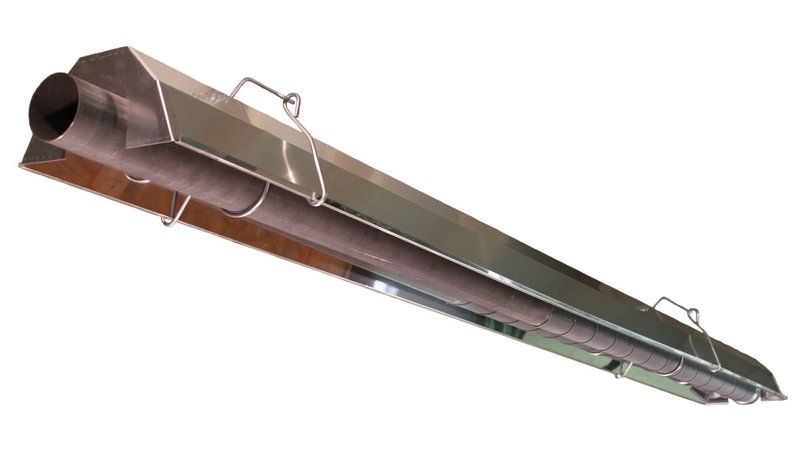
Vacuum radiant heating routes multiple heaters through a single shared exhaust line whenever possible. A draft inducer pulls combustion gases from several tubes toward one exit point. The resulting design needs far fewer roof penetrations than traditional one-vent-per-heater configurations require.
Vacuum radiant heating uses a draft inducer to pull combustion gases under negative pressure. Negative pressure like this lets multiple tube heaters share one common exhaust vent. Fewer vent runs mean fewer roof penetrations across the entire building footprint for owners.
Engineers group heaters by proximity to design an efficient shared exhaust routing plan. Longer vent runs become possible because the draft inducer actively pulls the gases. Natural draft systems cannot achieve the same distance without losing draft strength entirely.
Meanwhile, fewer roof penetrations also simplify the original building permit and inspection process. Inspectors and roofers both prefer fewer openings to review during construction and afterward.
Facility owners save real money, a point covered in this suspended tube radiant heat guide, on labor and maintenance. Fewer penetrations also mean fewer potential leak points across the entire roof surface. As a result, the building stays drier and cheaper to maintain for decades.
Comparing Roof Penetration Needs Across Venting Designs
Different venting designs require dramatically different numbers of roof penetrations for buildings of any size. Natural draft systems typically need one vent per heater in most installations available today. Vacuum radiant heating shares one exhaust line across several heaters in a single building.
Power-vented systems fall somewhere between these two approaches in installations engineers encounter regularly. They can share some venting but rarely match vacuum systems for total distance. The table below compares typical roof penetration counts across approaches engineers should weigh.
| Venting Design | Typical Roof Penetrations | Vent Run Length |
|---|---|---|
| Natural draft | One per heater | Short |
| Power vented | One per heater or small group | Moderate |
| Vacuum radiant heating | One per shared group | Long |
Meanwhile, actual numbers vary based on building layout and decisions made during design. A qualified engineer, referencing this infrared heater overview, can estimate real penetration counts for your project.
RC engineers can help you design an efficient shared exhaust routing plan for your building. Grouping heaters thoughtfully during design cuts penetrations without sacrificing heating performance anywhere in the building. For example, a well-planned layout might cut penetration count by more than half.
Vacuum Radiant Heating Options for Your Facility
Selecting a vacuum radiant heating solution starts with mapping your building's layout. Engineers group nearby heaters to share exhaust runs wherever the layout allows it. Roof structure and existing penetrations also factor into the final routing plan engineers develop.
Building age and roof condition also influence how many new penetrations make sense. Older roofs often benefit most from minimizing any additional openings during a retrofit. New construction offers more flexibility to plan an efficient exhaust routing from scratch.
Meanwhile, local codes may limit how many heaters can share a single exhaust. An experienced installer knows how to navigate these requirements without delaying your project.
When designing a vacuum radiant heating installation, review these key project details:
- Building layout and heater grouping options
- Roof age, condition, and existing penetrations
- Local code limits on shared venting
- Vent run length and routing path
CRC engineers can help you design a system that minimizes total roof penetrations. Getting this layout right protects your roof for decades of ongoing service life. Therefore, careful planning upfront saves real money across the life of your building.
Vacuum radiant heating gives you a practical way to protect your roof long term. Fewer penetrations mean fewer leaks, lower maintenance costs, and a longer roof lifespan. CRC engineers can help you design a system built around this efficient approach.
Our team supplies vacuum radiant heating systems for warehouses and industrial buildings. We can help you group heaters efficiently and minimize your total roof penetrations. Speak with our engineers soon about vacuum radiant heating options for your building project.