The term "radiant heating" covers a wide spectrum. A residential electric floor mat for a single bathroom is radiant heat. So is a gas-fired infrared tube heater system designed to warm a 200,000 sq ft aircraft hangar. These two products share a heat transfer principle but almost nothing else — not their cost structure, not their application, and not their long-term value.
This article breaks down what radiant heat actually costs across system types, what drives prices up or down, and what most buyers get wrong when comparing options.
Key Takeaways
- Commercial gas-fired radiant tube heaters range from $1,000–$5,000+ per unit before installation — project totals vary widely by facility size and BTU load
- Commercial infrared system costs are project-specific, driven by BTU output, ceiling height, and facility footprint
- Electric systems cost less to install but significantly more to operate in large commercial facilities
- Gas-fired infrared tube heaters can deliver 30–50% lower operating costs than conventional forced-air heating
- A system saving 30–50% annually on fuel often recovers its install cost within 3–5 years in high-use commercial facilities
How Much Does Radiant Heat Cost?
Radiant heat pricing varies significantly by technology, facility type, and scale. Electric in-floor, hydronic in-floor, and gas-fired infrared systems each carry a distinct cost profile — and choosing the wrong benchmark leads to underbudgeting or the wrong system entirely.
Residential Radiant Floor Heating
According to Angi's 2026 cost data, professional radiant floor heating projects range from $1,653 to $6,656, with an average of $4,128. Installed costs across all residential radiant types run $6–$20/sq ft.
| System Type | Per Sq Ft Range | Whole-Home Cost Range |
|---|---|---|
| Electric (materials + installation) | $15–$25/sq ft | $19,000–$36,000 |
| Hydronic (materials + installation) | $6–$20/sq ft | $19,000–$48,000 |
Commercial Gas-Fired Infrared Heating
Commercial radiant heat is a different category entirely. Gas-fired infrared tube heaters — such as those manufactured by Combustion Research Corporation (CRC) — are sized by facility square footage, ceiling height, and BTU requirements. Pricing is project-specific: BTU output determines how many units a facility needs, which drives the total installed cost.
BTU output ranges for commercial tube heaters:
- Light commercial / single-bay systems: 40,000–60,000 BTU/hr
- Mid-to-large commercial systems: 85,000–200,000 BTU/hr
- Large industrial systems: Up to 250,000 BTU/hr per burner unit
No reliable national cost-per-square-foot benchmark exists for commercial infrared tube systems. Project size, ceiling height, gas availability, and local labor rates create too much variability for a single figure to be meaningful.
Entry-Level to High-End: What Each Tier Includes
That variability across both residential and commercial systems makes tier comparisons more useful than averages. Here's what each investment level typically covers.
Entry-Level / Small-Area:
- Small electric floor mat for one bathroom or room
- Basic thermostat, DIY-friendly installation
- Excludes labor, subfloor prep, and permits
- Best for: Supplemental warmth in a single room
Mid-Range / Standard Setup:
- Larger electric or entry-level hydronic system covering multiple rooms
- Professional installation, programmable thermostat
- Best for: Full-floor residential heating in remodels or new construction
High-End / Large-Scale:
- Whole-home hydronic or full-facility commercial infrared tube systems
- Engineering support, advanced controls, system design, permits
- Best for: Primary heating in warehouses, aircraft hangars, service garages, and large industrial facilities
Key Factors That Drive the Cost of Radiant Heat
No two radiant heating projects cost the same. Pricing is shaped by a combination of technical, operational, and site-specific variables.
System Type
The most consequential choice is the system type: electric, hydronic, or gas-fired infrared.
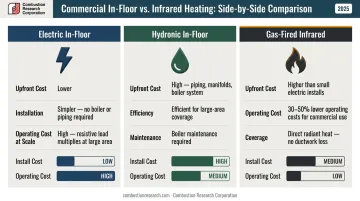
- Electric in-floor: Lower upfront cost, simpler installation — but significantly more expensive to operate at scale
- Hydronic in-floor: High installation cost, efficient for large areas, requires ongoing boiler maintenance
- Gas-fired infrared tube heaters: Higher upfront cost than small electric systems, but substantially lower operating costs for commercial and industrial facilities
Configuration choices also matter. Vacuum-vented systems like CRC's Reflect-O-Ray can share a common exhaust manifold — reducing roof penetrations by up to two-thirds compared to competing power-vented systems in high-bay applications. That directly lowers installation labor cost in large facilities.
Size, Capacity, and Ceiling Height
Area is one of the most significant cost drivers. Larger spaces require more BTU output, more units, and more complex installation. High-ceiling environments compound this — heat rises, and warehouses or hangars with 20–30 ft ceilings need higher BTU density per square foot to compensate.
Rough BTU sizing guidelines:
- Insulated warehouse, 16 ft ceilings: 25–40 BTU/sq ft
- Uninsulated high-bay, 20–30 ft ceilings: 40–65 BTU/sq ft
- High door-cycling or poorly insulated facilities: 65+ BTU/sq ft
A 10,000 sq ft insulated warehouse might need 250,000–400,000 total BTU/hr. The same footprint with 25 ft ceilings and poor insulation could need up to 650,000 BTU/hr — a meaningful difference in equipment and installation cost.
Installation and Site Requirements
Installation is where cost estimates most often run over — driven by:
- New construction is typically cheaper to equip than retrofits, especially for in-floor hydronic systems
- Retrofit projects may require upgraded gas lines, new electrical drops, additional roof penetrations, or structural modifications
- High-bay facilities need appropriate rigging for ceiling-mounted systems
- Permit requirements vary by jurisdiction and can add cost and timeline
Operating and Energy Costs
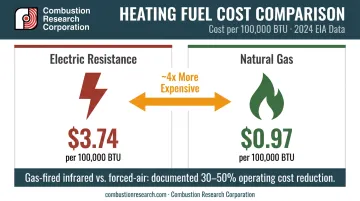
Fuel type has a major impact on what you'll pay every month. Using 2024 EIA commercial rate data, delivering 100,000 BTU costs approximately:
- Electric resistance: $3.74
- Natural gas: $0.97
That's nearly a 4x fuel-cost difference at the input energy level. For facilities running heat 8–12 hours a day, this gap compounds into thousands of dollars annually. Gas-fired infrared tube heaters, when replacing forced-air systems, deliver documented operating cost reductions of 30–50% across commercial applications.
Maintenance and Warranty
Operating cost is only part of the lifecycle equation. Maintenance frequency and warranty terms affect total cost of ownership as well.
Systems with fewer moving parts cost less to maintain over time. CRC's gas-fired radiant tube heaters require no combustion air filters — a maintenance category that forced-air systems must address on a recurring schedule. In high-particulate industrial environments, missed filter maintenance causes pressure faults and unplanned service calls.
Warranty terms are a proxy for durability. CRC backs its Omega II, Reflect-O-Ray, and Serengeti-IR systems with a 10-year limited warranty on combustion and heat exchanger tubes (internally created corrosion) and a 3-year warranty on burner controls. Longer coverage shifts lifecycle risk back to the manufacturer.
Full Cost Breakdown: One-Time and Ongoing Expenses
The purchase price is only one part of what radiant heating actually costs.
One-Time Costs:
- Equipment (heating units, controls, thermostats, accessories)
- Installation labor and site preparation
- Gas line connection or electrical drops
- Mounting hardware and structural attachment
- Permitting and inspections
Recurring Costs:
- Energy (natural gas or electricity, billed monthly)
- Annual system inspections (recommended for gas-fired systems)
- Periodic burner servicing, thermostat replacement, or reflector cleaning
- Hydronic systems add boiler maintenance, pump service, and fluid treatment
Sample Operating Context:
Understanding these categories is useful, but real costs depend on how your facility actually operates.
For commercial gas-fired infrared systems, monthly operating costs vary by facility BTU load, local gas rates, and daily run hours — a 20,000 sq ft warehouse operating single-shift will look very different from a 24/7 manufacturing floor. CRC provides facility-specific BTU calculators at combustionresearch.com/resources/calculators to estimate operational costs before purchase.
What Most Buyers Get Wrong About Radiant Heat Costs
Most commercial buyers fall into one of four traps when evaluating radiant heat costs. Knowing them upfront can save thousands over the life of a system:
- Fixating on purchase price while ignoring operating efficiency
- Mismatching system type to the application
- Underestimating retrofit complexity
- Skipping the lifecycle cost calculation entirely
Focusing Only on Upfront Purchase Price
A 20% efficiency gap between two commercial systems may look insignificant on the quote sheet. Across a full heating season running 10 hours a day, that difference can represent thousands of dollars — compounding year over year for the life of the system.
Choosing the Wrong System for the Application
Using residential electric floor mats to heat a warehouse is a mismatch that produces poor performance and high operating costs. Over-specifying a large custom-engineered vacuum system for a small single-bay shop adds unnecessary cost on the other end. The right system size and type for the specific application determines whether operating costs stay manageable long-term.
Underestimating Retrofit Complexity
Hydronic in-floor systems in particular can require tearing up existing flooring, adding gas lines, or upgrading electrical service. These costs rarely appear in early budget estimates and regularly push final project costs 20–40% above the original quote.
Skipping the Lifecycle Cost Calculation
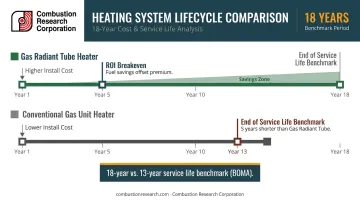
BOMA's preventive maintenance data assigns gas radiant heaters an 18-year service life benchmark — five years longer than conventional gas unit heaters. A system that costs more upfront but lasts longer and costs less to run will almost always deliver better value over a 15-year horizon than the option that wins on day-one purchase price.
Frequently Asked Questions
Is radiant heat expensive per month?
Monthly costs depend on system type, fuel source, and usage patterns. Small electric radiant installations — a single bathroom, for reference — typically run $10–$35/month. In commercial facilities, gas-fired infrared systems cost significantly less per BTU than electric alternatives, making them far cheaper to operate at scale.
Why is my electric bill so high with radiant heat?
Electric radiant systems draw substantial wattage, and without a programmable thermostat or zone controls, consumption climbs quickly across large areas. A smart thermostat limiting runtime to occupied hours is the fastest fix; for large commercial spaces, gas-fired infrared typically eliminates this cost pressure at the source.
What is the difference between electric and gas radiant heating costs?
Electric systems cost less to install but more to run — especially at scale, where the fuel cost gap approaches 4:1 in favor of natural gas. Gas-fired infrared tube heaters carry higher upfront costs but deliver lower monthly operating expenses and documented 30–50% savings versus forced-air alternatives in commercial applications.
Is radiant heat cheaper than forced air?
Gas-fired infrared radiant heat is generally more efficient than forced air because it heats surfaces and objects directly rather than circulating air that escapes through gaps and infiltration points. Wisconsin's 2025 Technical Reference Manual documents infrared heating at 3.34 therms of annual savings per MBh of installed input against an 80% efficiency forced-air baseline.
How much does it cost to install radiant heating in a warehouse or large commercial space?
No universal per-square-foot benchmark exists for commercial infrared tube systems — project cost depends on ceiling height, BTU load, system type, gas availability, and local labor rates. For a facility-specific estimate, contact a CRC representative at combustionresearch.com/find-a-rep or call 888-852-3611.
Does radiant heat save money in the long run?
Gas-fired radiant systems deliver long-term savings through lower fuel costs versus electric alternatives, minimal maintenance compared to hydronic or forced-air systems, and service lives that routinely reach 18 years or more under normal commercial use. The higher upfront cost is typically offset within a few years by the 30–50% reduction in operating expenses.