That gap matters. Facility managers increasingly choose radiant tube heating over forced-air systems for large, drafty, or high-ceiling spaces, and manufacturers like Combustion Research Corporation (CRC) have spent over 50 years refining how these systems perform in exactly those conditions.
The problem: buyers often know radiant tubes save energy without understanding the combustion and heat-transfer process behind that savings. This leads to undersized systems, wrong venting choices, and maintenance surprises down the road.
This guide breaks down what a radiant tube is and exactly how it works, stage by stage, so you can make an informed heating decision for your facility.
Key Takeaways
- Radiant tube heaters burn fuel in a sealed tube, radiating heat directly to floors, equipment, and people
- The process runs in four stages: ignition, combustion, radiation, and exhaust venting
- Common in warehouses, garages, barns, ice arenas, and other high-ceiling commercial spaces
- Radiant systems can cut operational heating costs by 30-50% versus conventional forced-air setups
What Is a Radiant Tube?
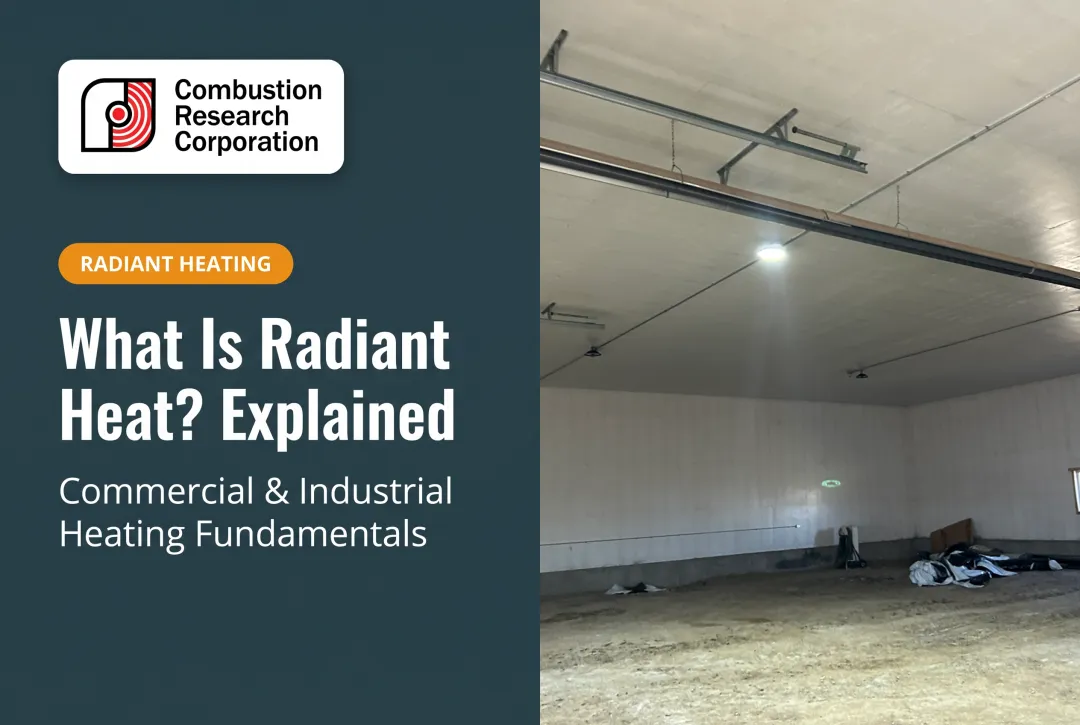
A radiant tube heater is a gas combustion system where fuel burns inside a metal tube. That combustion heats the tube itself, and the hot metal surface radiates infrared energy outward. It doesn't heat the air first and rely on that warm air to reach you. It warms objects and surfaces directly.
That distinction solves a real problem. Traditional forced-air furnaces waste energy heating and circulating air in buildings with high ceilings, frequent door openings, or constant drafts. A radiant tube doesn't care how much cold air is blowing through a loading dock. It warms the floor, the equipment, and the people in the space regardless of air movement.
What a Radiant Tube Is Not
It's easy to lump radiant tubes in with other "radiant" technologies, but they're mechanically different:
- Hydronic radiant floor heating circulates boiler-heated water through tubing under the floor. No combustion, no visible tube, no gas burner.
- Electric infrared panels use resistance-heated elements or mats, not gas combustion in a metal tube.
- Radiant tube heaters are gas-fired, ceiling-mounted, and generate heat through combustion inside the tube itself.
Why Radiant Tubes Still Win in Industrial Buildings
Despite newer heating technology hitting the market every year, radiant tubes remain a preferred choice for large industrial buildings. Part of the reason is mechanical simplicity: there's no filter to clog, no duct network to leak, and fewer moving parts to wear out compared to a forced-air unit heater.
CRC's Omega II and Reflect-O-Ray systems, for example, are engineered so combustion air filters aren't required at all, which removes a common failure point in dusty industrial and agricultural settings.
Types and Configurations
Radiant tube heaters come in a few core configurations, each suited to different building requirements:
- Low-intensity vs. high-intensity infrared tubes: low-intensity units run cooler and heat larger areas evenly; high-intensity units concentrate heat for spot applications
- Straight-tube vs. U-tube layouts: layout depends on ceiling clearance and building footprint
- Vacuum-vented vs. power-vented systems: vacuum-vented designs pull exhaust from the tube end under negative pressure, while power-vented designs push exhaust from the burner end
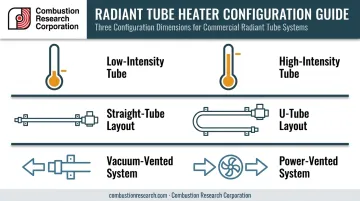
CRC offers both configurations, with vacuum-vented systems available through its Reflect-O-Ray Engineered Design Systems and power-vented systems through its Omega II Pre-Engineered Packages. The ANSI Z83.20 standard governing this equipment category covers gas-fired low-intensity infrared and radiant tube heaters up to 400,000 Btu/h per burner, which gives you a sense of the scale these systems are built to handle.
How Does a Radiant Tube Heater Work?
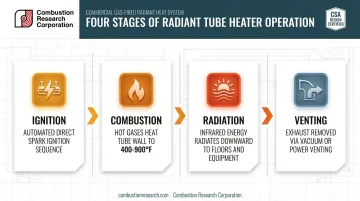
A radiant tube heater operates through a defined sequence: ignition, combustion, heat radiation, and exhaust venting. Each stage contributes to the same goal, which is consistent, even warmth delivered without wasting fuel.
Ignition and Startup
The process begins when a thermostat or building control system signals the burner to ignite. At that moment, gas and combustion air mix at the burner head in a precise ratio.
Modern industrial units don't rely on manually lighting a pilot. Ignition is automated, typically through direct spark ignition rather than a standing pilot light. Most of CRC's product lines use a 3-try direct spark system with a 100% safety lockout, meaning the unit stops trying and shuts down safely if ignition doesn't succeed within three attempts.
Proper burner alignment and calibration at startup matters more than most operators realize. Misaligned burners can cause flame impingement or incomplete combustion, both of which shorten tube life over time.
Combustion and Heat Generation
This is the core of how a radiant tube heater works. Hot combustion gases travel the full length of the sealed metal tube, heating the tube wall from the inside out.
As the tube surface climbs to high temperatures, it emits infrared radiant energy that travels in straight lines to warm floors, equipment, and people below, according to an ASHRAE Journal engineering overview.
That same source notes tube surface temperatures typically run between 400 and 900 degrees Fahrenheit along the length of the tube. No fan is stirring air. No duct is losing heat along the way. The tube simply radiates.
A few design variables affect how well this stage performs:
- Tube design (finned vs. straight-wall) influences how efficiently heat transfers to the outer surface
- Reflector placement directs radiant output downward instead of losing it upward
- Tube length affects distribution evenness and how quickly a space reaches target temperature
Modulation and Control
Heat demand isn't constant. Morning startup in a cold warehouse needs more output than a mild afternoon. Staged or modulating burners handle that swing without shutting the system on and off constantly.
CRC's True Dual Modulating Heater adjusts both gas and air input together, shifting between high- and low-heat output as ambient temperature changes. The system burns gas only when it actually needs to, matching air-to-gas ratios precisely at both stages.
This matters for three practical reasons:
- Prevents overheating in zones that are already warm
- Cuts fuel waste tied to unnecessary on/off cycling
- Keeps temperatures even across large open spaces, avoiding the hot and cold pockets common with forced-air systems
Venting and Output
That modulation keeps fuel use efficient, but none of it matters if combustion byproducts aren't cleared safely. The result is consistent radiant warmth delivered from ceiling height down to the occupied space, without the air currents that stir up dust in a forced-air system.
Getting exhaust safely out of the building happens one of two ways:
- Vacuum-vented systems (like CRC's Reflect-O-Ray) place an exhauster at the tube end, drawing combustion gases through under negative pressure. If a joint fails, ambient air gets pulled inward rather than exhaust pushing outward, which is a meaningful safety advantage.
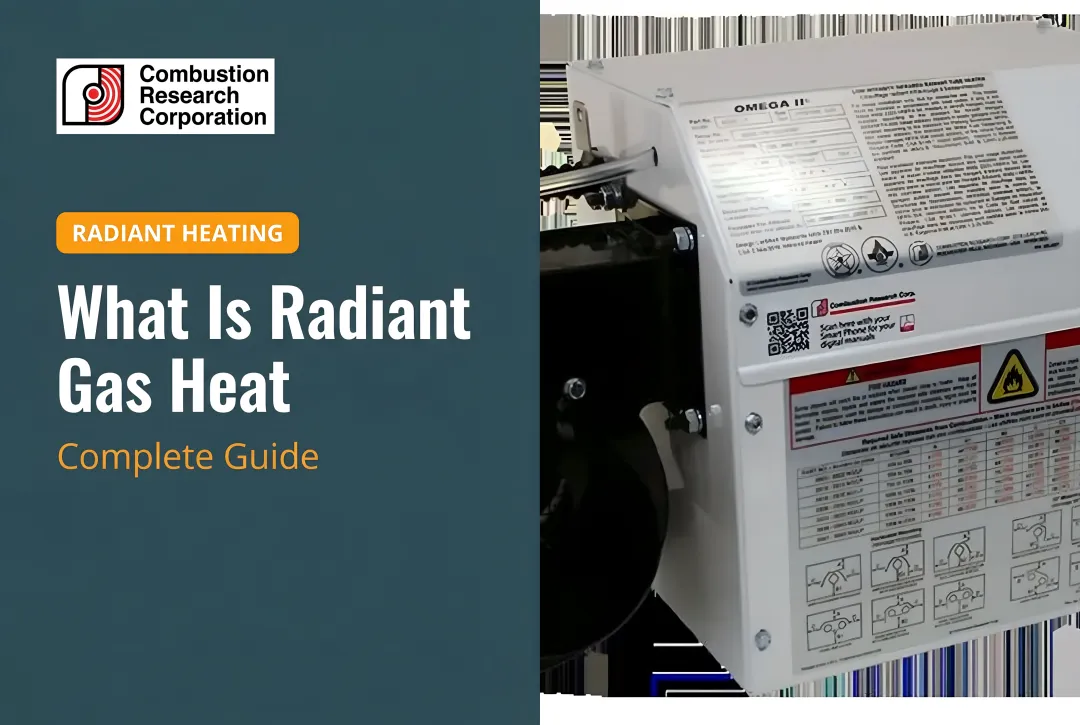
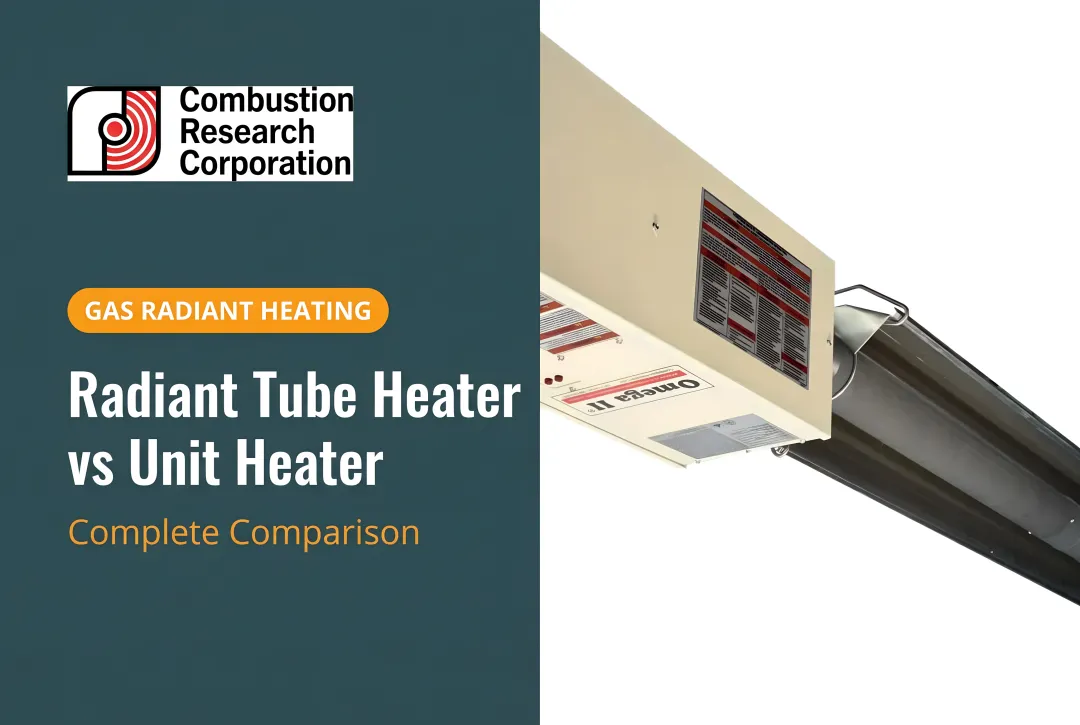
- Power-vented systems (like CRC's Omega II) place the blower at the burner end, pushing combustion gases through under positive pressure. This handles longer tube runs and complex exhaust paths well.
Which one a facility needs depends on building design, ceiling height, and local venting codes. Consistent output paired with proper venting translates directly into lower fuel consumption and reduced wear on the heat exchanger over years of operation.
Where Radiant Tube Heaters Are Used
Radiant tube heaters go where forced-air heating struggles most: large-volume or high-ceiling spaces where warm air rises out of reach before it ever helps anyone at floor level.
They perform especially well in buildings with:
- Frequent door openings, such as loading docks and hangar bays
- High air infiltration from older or leaky building envelopes
- Targeted heating needs, like specific work bays instead of an entire floor
Commercial and industrial facilities have long relied on this equipment in warehouses, service garages, loading docks, and airplane hangars, according to trade coverage from ACHR News.
CRC's core customer segments reflect that same pattern. Aircraft hangars, animal confinement barns, auto dealerships, ice arenas, and natatoriums all rely on radiant tube systems. Each application still calls for its own BTU sizing and construction material based on ceiling height, humidity, and corrosive exposure.
Benefits of Radiant Tube Heating
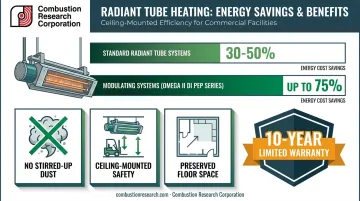
The efficiency case for radiant tube heating is well documented across the industry. CRC's product data across its Reflect-O-Ray, Omega II, and Synergy lines shows 30-50% lower operational heating costs compared to conventional forced-air systems.
Certain modulating configurations, like the Omega II DI PEP series, push that figure to up to 75% in energy savings under optimal operating conditions.
Beyond fuel costs, radiant heating changes how a facility functions day to day:
- No stirred-up dust: radiant tubes don't rely on blowing air, so they avoid circulating dust and debris the way forced-air blowers do
- Ceiling-mounted equipment: keeps heaters out of the path of forklifts and material-handling machinery, reducing accidental contact hazards
- Preserved floor space: no bulky floor-standing units eating into usable operational area
For facility owners weighing long-term reliability, CRC backs its Burner Core and combustion/heat exchanger tubes with a 10-year limited warranty against internally created corrosion. Engineering support is also available throughout the specification process, for both new construction and retrofit projects.
Conclusion
Ignition, combustion inside the tube, radiant heat emission, and controlled venting work together as one system, each stage feeding the next to deliver efficient, targeted warmth without wasting energy on heating air nobody's breathing.
Understanding that sequence changes how you specify a system. It's the difference between guessing at a BTU number and matching a heater to your ceiling height, door-cycle frequency, and venting requirements.
If you're planning new construction or a retrofit, working with an experienced manufacturer like Combustion Research Corporation gives you engineering support at exactly the stage where sizing mistakes are cheapest to avoid.
Frequently Asked Questions
What is a radiant tube?
A radiant tube is a sealed metal tube heated internally through gas combustion. As the tube surface heats up, it radiates infrared energy outward to warm objects, floors, and people directly.
How long do radiant tube heaters last?
With proper installation, calibration, and routine maintenance, radiant tube heaters can run reliably for many years. Warranty coverage, such as CRC's 10-year limited warranty on Omega II, Reflect-O-Ray, and Serengeti-IR tubes, reflects that expected durability.
Are radiant tube heaters safe?
Ceiling-mounted radiant tube heaters keep equipment out of the path of forklifts and machinery, reducing contact hazards. Proper venting and electronic flame monitoring also ensure combustion byproducts are removed safely.
Do radiant tube heaters need to be vented?
Yes. Combustion gases must be exhausted through either a vacuum-vented or power-vented configuration. Which one you need depends on your building layout and local fuel-gas code requirements.
What is the difference between low-intensity and high-intensity infrared tube heaters?
Low-intensity tubes run at a lower surface temperature over longer tube runs, delivering gentle, even heat across a wide area. High-intensity units run hotter and more concentrated, typically for spot heating in a specific zone.
How much energy can radiant tube heaters save compared to conventional heating?
Radiant tube systems typically reduce operational heating costs by 30-50% compared to conventional forced-air systems, based on documented performance across industrial installations.