Reflect-O-Ray
Reflect-O-Ray vacuum gas-fired radiant infrared systems are custom-engineered for large facilities needing efficient coverage, negative-pressure operation, and burner inputs from 40,000 to 250,000 BTU/hr.

Understand how vacuum tube heater systems work, where they perform best, and how to evaluate sizing, fuel type, construction, safety certifications, and operating cost. This guide focuses on commercial and industrial infrared heating applications, including warehouses, hangars, manufacturing plants, service bays, agricultural buildings, natatoriums, and other demanding facilities where conventional forced-air heat often wastes energy.
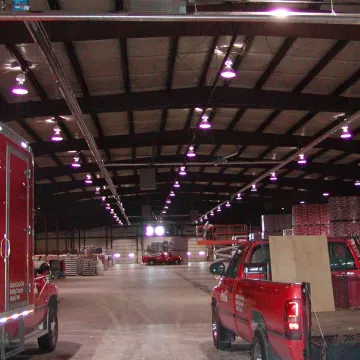
Explore vacuum radiant tube options, sizing guidance, and commercial applications from Combustion Research Corporation.
Reflect-O-Ray vacuum gas-fired radiant infrared systems are custom-engineered for large facilities needing efficient coverage, negative-pressure operation, and burner inputs from 40,000 to 250,000 BTU/hr.
Omega II power-vented radiant tube heaters provide unitary, single-side-vented gas-fired infrared heating for commercial and industrial facilities where a full vacuum-engineered system is not required.
Serengeti-IR brings patented dry tube technology to smaller commercial, agricultural, and light-industrial footprints with compact 40,000 to 60,000 BTU gas-fired radiant packages.
CRC engineering references help facility teams evaluate BTU sizing, clearances, installation cost, operating cost, payback, utility rebates, and gas-versus-electric heating decisions.
Warehouse radiant heating systems are engineered for tall ceilings, loading-dock door cycles, distribution centers, 3PL facilities, and large spaces where heating empty air wastes fuel.
Aircraft hangar radiant tube systems are designed for high-bay structures, oversized doors, rapid heat recovery, and floor-level comfort around aircraft, tools, and maintenance teams.
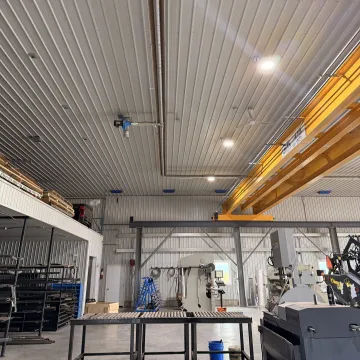
Start by documenting square footage, ceiling height, insulation quality, door cycles, occupied zones, fuel availability, and any corrosive exposure. These details help determine whether a vacuum radiant tube system, power-vented unit, compact heater, or high-intensity infrared option fits best.
Specified across demanding commercial, industrial, agricultural, and high-bay environments throughout North America.
Combustion Research Corporation combines proven manufacturing, certifications, and application-focused engineering.
Over 50 years manufacturing low-intensity infrared systems for industrial and commercial facilities.
CSA International Design Certified products support safer specification and code review.
Radiant systems reduce operational costs 30-50% compared with conventional forced-air heating.
Engineering support helps match heater type, sizing, construction, fuel, and clearances.
Engineering durable infrared heating systems built for demanding facilities.
Combustion Research Corporation has manufactured low-intensity infrared heating solutions for over 50 years from its headquarters in Rochester Hills, Michigan. The company focuses on durable, energy-efficient heating systems for challenging commercial, industrial, and agricultural buildings across North America. Its product families include Reflect-O-Ray vacuum systems, Omega II power-vented radiant tube heaters, Serengeti-IR compact heaters, and Synergy high-intensity ceramic infrared heaters. CRC supports facility managers, mechanical engineers, and design-build contractors with specification guidance for new construction and retrofit projects. With CSA-certified products, MasterSpec listings, and long warranty coverage, the company’s vision is straightforward: industrial infrared heating solutions built to last.
Commercial radiant tube heaters are often designed for long operating cycles, but they should be controlled by thermostats, building management systems, or staged controls rather than simply left running without demand. Combustion Research systems include safety features such as direct spark ignition, electronic flame monitoring, pre-purge cycles, and lockout controls. Always follow the specific product manual, local codes, and your facility’s operating requirements.
Get answers on sizing, clearances, fuel options, and specifications.

Design certification for gas-fired infrared heating equipment.
Recognized standard for radiant tube heaters.

Specification resource for commercial construction projects.
Share facility square footage, ceiling height, fuel type, and application details so a representative can help with sizing, specifications, and quote next steps.
For immediate assistance, feel free to give us a direct call at 888-852-3611. You can also send us a quick email at info@combustionresearch.com.
For immediate assistance, feel free to give us a direct call at 888-852-3611. You can also send us a quick email at info@combustionresearch.com.