Radiant Tube Heater Installation: Complete Guide

Get a practical, engineering-focused overview of radiant tube heater installation for commercial and industrial facilities. Learn how ceiling height, BTU sizing, fuel type, venting, clearances, and application demands shape the right system design. Combustion Research Corporation helps facility managers and contractors evaluate efficient infrared heating systems built for warehouses, hangars, service bays, plants, and specialized environments.

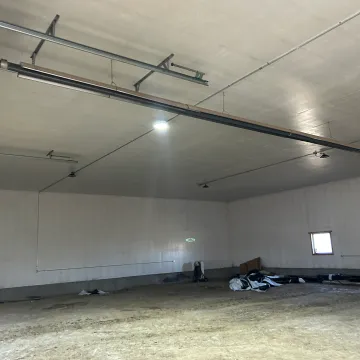
Radiant tube heater installed in industrial facility

Our Radiant Tube Heater Services

Explore radiant tube heater options, sizing guidance, and application-specific installation considerations for demanding facilities.

Reflect-O-Ray Systems

Custom-engineered vacuum radiant infrared tube systems designed for large commercial and industrial facilities requiring efficient full-building heat coverage, long burn lengths, and reduced utility drops.

Omega II Heaters

Power-vented gas-fired radiant tube heaters for straightforward commercial and industrial zones where unitary installation, straight or U configurations, and 105K–200K BTU inputs are appropriate.

Serengeti-IR Units

Compact 40K–60K BTU radiant tube systems scaled for smaller commercial, agricultural, single-bay, detail-bay, workshop, brooder, or light-industrial heating applications.

Sizing Guidance

Engineering reference support for BTU sizing, mounting heights, clearance requirements, installation cost factors, operating cost comparisons, and projected energy savings or payback.

Warehouse Heating

Radiant infrared heating layouts for warehouses and distribution centers with tall ceilings, dock-door cycles, large floorplates, and occupied work areas needing consistent comfort.

Specialty Applications

Specialized infrared heater recommendations for aircraft hangars, vehicle bays, service departments, CNG repair facilities, ice arenas, natatoriums, and corrosion-prone environments.
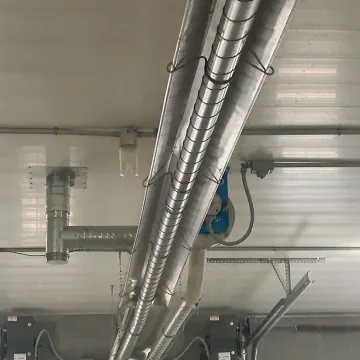
Technicians reviewing radiant tube heater installation layout

Our Radiant Installation Planning Process

Assess Facility Conditions

Start by documenting square footage, ceiling height, insulation, door-cycle frequency, ventilation, fuel availability, and occupied work zones. These inputs determine whether a low-intensity radiant tube, high-intensity spot heater, or specialized stainless system is most appropriate.

Calculate Heating Load

Select the Heater System

Confirm Layout and Clearances

Install and Commission

Proven Applications

Field-Proven Results

Specified across demanding commercial, industrial, agricultural, and specialty heating applications throughout North America.

"Our 16-bay garage runs with doors opening constantly, so keeping students comfortable through Connecticut winters was a real challenge. Reflect-O-Ray units installed over each bay solved it. The concrete floor acts as a heat sink, absorbing and re-radiating warmth back into the space, so students feel warm at lower thermostat..."

Ella T. Grasso Technical School

"We chose a two-stage Omega II 30-ft low intensity tube system for our new two-story hospital, and it's been the right call. The 60,000–100,000 MBH output keeps our rear operating area genuinely comfortable, not just warm air blowing around. Our concrete slab absorbs and re-radiates the heat, so the space..."

Fenton River Veterinary Hospital

"Hangars are the hardest buildings to heat. High bay, minimal insulation, and a massive overhead door that dumps cold air in every time it opens. Forced air simply couldn't keep up without burning through energy. Ten 40-foot straight tubes at 150 MBH with reflectors changed that completely. Radiant heat warms..."

Tac Air – Bradley International Airport

"Heating a 120-yard indoor field under a 65-foot domed roof is not a standard job, and Reflect-O-Ray was the only system engineers felt could be tailored to it. Twelve 360,000 B/H burners firing 140-foot tubes condition the entire space efficiently. Infrared fit directly into our campus energy conservation standards and..."

University of Connecticut Athletics

"Our 16-bay garage runs with doors opening constantly, so keeping students comfortable through Connecticut winters was a real challenge. Reflect-O-Ray units installed over each bay solved it. The concrete floor acts as a heat sink, absorbing and re-radiating warmth back into the space, so students feel warm at lower thermostat..."

Ella T. Grasso Technical School

"We chose a two-stage Omega II 30-ft low intensity tube system for our new two-story hospital, and it's been the right call. The 60,000–100,000 MBH output keeps our rear operating area genuinely comfortable, not just warm air blowing around. Our concrete slab absorbs and re-radiates the heat, so the space..."

Fenton River Veterinary Hospital

"Hangars are the hardest buildings to heat. High bay, minimal insulation, and a massive overhead door that dumps cold air in every time it opens. Forced air simply couldn't keep up without burning through energy. Ten 40-foot straight tubes at 150 MBH with reflectors changed that completely. Radiant heat warms..."

Tac Air – Bradley International Airport

"Heating a 120-yard indoor field under a 65-foot domed roof is not a standard job, and Reflect-O-Ray was the only system engineers felt could be tailored to it. Twelve 360,000 B/H burners firing 140-foot tubes condition the entire space efficiently. Infrared fit directly into our campus energy conservation standards and..."

University of Connecticut Athletics

"Our 16-bay garage runs with doors opening constantly, so keeping students comfortable through Connecticut winters was a real challenge. Reflect-O-Ray units installed over each bay solved it. The concrete floor acts as a heat sink, absorbing and re-radiating warmth back into the space, so students feel warm at lower thermostat..."

Ella T. Grasso Technical School

"We chose a two-stage Omega II 30-ft low intensity tube system for our new two-story hospital, and it's been the right call. The 60,000–100,000 MBH output keeps our rear operating area genuinely comfortable, not just warm air blowing around. Our concrete slab absorbs and re-radiates the heat, so the space..."

Fenton River Veterinary Hospital

"Hangars are the hardest buildings to heat. High bay, minimal insulation, and a massive overhead door that dumps cold air in every time it opens. Forced air simply couldn't keep up without burning through energy. Ten 40-foot straight tubes at 150 MBH with reflectors changed that completely. Radiant heat warms..."

Tac Air – Bradley International Airport

"Heating a 120-yard indoor field under a 65-foot domed roof is not a standard job, and Reflect-O-Ray was the only system engineers felt could be tailored to it. Twelve 360,000 B/H burners firing 140-foot tubes condition the entire space efficiently. Infrared fit directly into our campus energy conservation standards and..."

University of Connecticut Athletics
Built to Last

Why Choose Combustion Research Corporation?

Combustion Research Corporation combines durable manufacturing, engineering support, and proven infrared heating performance.

Experience

Over 50 years manufacturing infrared heating systems for demanding industrial and commercial facilities.

Certified

CSA International Design Certified systems support safe specification and code review.

Engineering

Engineering support helps match BTU sizing, clearances, fuel type, and facility layout.

Efficiency

Systems can reduce operating costs 30–50% compared with conventional forced-air heating.

Meet Combustion Research Corporation

Experienced manufacturer supporting engineered infrared heating projects.

Combustion Research Corporation has manufactured low-intensity infrared heating solutions for over 50 years, earning a reputation for durable systems built for challenging industrial applications. From its headquarters in Rochester Hills, Michigan, the company supports commercial, industrial, and agricultural heating projects across North America through an established representative network. Its product families include Reflect-O-Ray vacuum systems, Omega II power-vented packages, Serengeti-IR compact units, Synergy high-intensity ceramic heaters, and Solaira electric infrared systems. The company’s focus is practical engineering: helping facility managers, mechanical engineers, and design-build contractors specify systems that improve comfort, reduce operating costs, preserve floor space, and withstand demanding environments.

50+ YearsManufacturing infrared heating solutions for demanding applications.
30-50%Documented energy savings over conventional heating systems.
10-Year WarrantyLimited radiant tube warranty for eligible product families.

Frequently Asked Questions

Where should radiant tube heaters be placed?

Radiant tube heaters are typically mounted overhead where they can direct infrared energy toward occupied floor areas, workstations, equipment, or vehicle bays. Placement depends on ceiling height, building layout, combustible clearances, vent routing, door cycles, and reflector orientation. Low-intensity radiant tubes often suit 10- to 30-foot mounting heights, while high-intensity ceramic systems may be used for spot or zone heating.

How much does it cost to install a radiant tube heater?

How do you size a radiant tube heater?

What clearance is needed around a radiant tube heater?

Are radiant tube heaters more efficient than forced air?

What fuel types are available for radiant tube heaters?

What is the difference between vacuum and power-vented radiant tube heaters?

What facilities are best suited for radiant tube heater installation?

Still Have Installation Questions?

Get engineering guidance before selecting your system.

Certified & Proven

Awards and Recognition

CSA International Design Certified logo

CSA Design Certified

Certified to recognized gas appliance safety standards.

ANSI Z83.20 CSA 2.34 certification logo

ANSI Z83.20

Meets applicable radiant heater safety standard.

Made in USA certified badge

Made in USA

Manufactured domestically for durable industrial performance.

Plan Your Radiant Tube Heater Installation

Share your facility size, ceiling height, fuel type, and application requirements, and Combustion Research Corporation can help route you toward sizing guidance, product specifications, or a local representative.

Contact Us Today

For immediate assistance, feel free to give us a direct call at 888-852-3611. You can also send us a quick email at info@combustionresearch.com.